
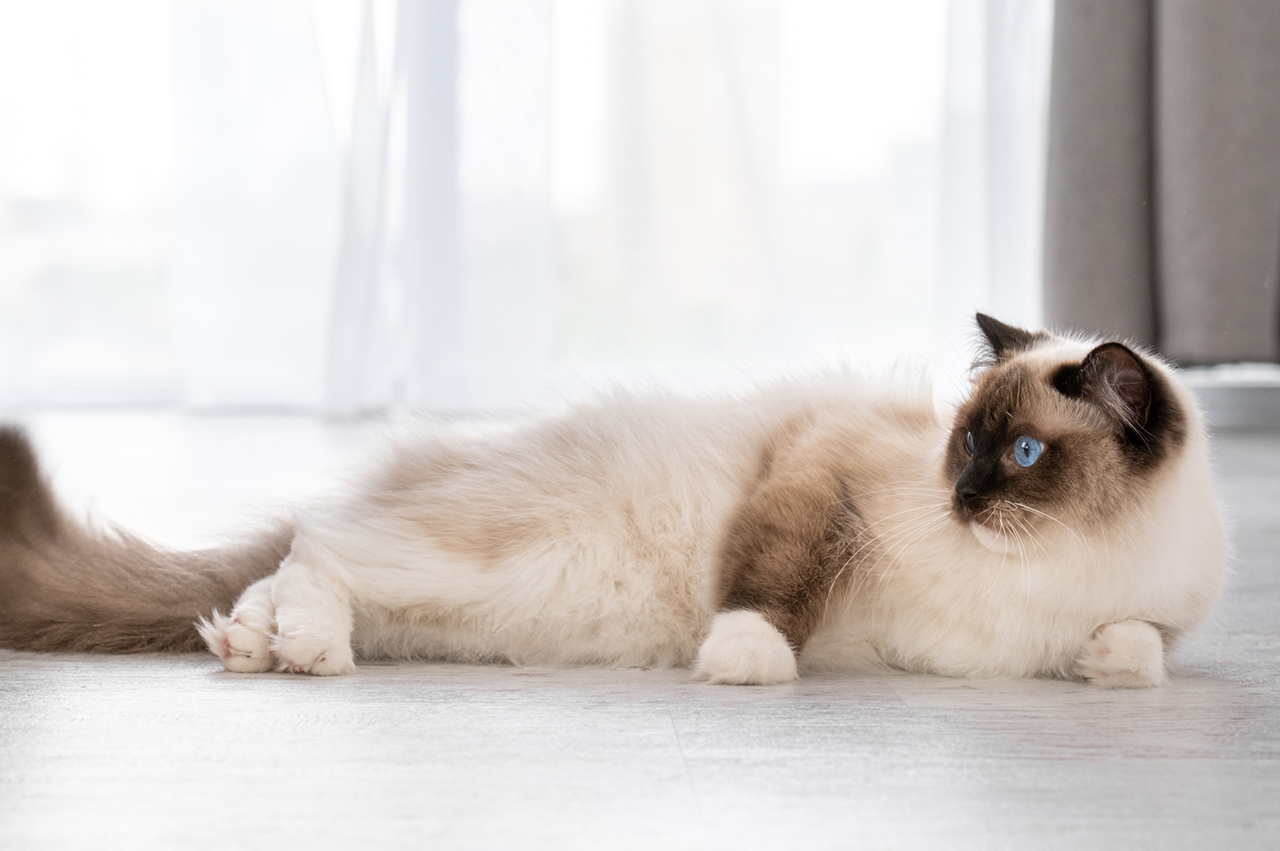
Ragdoll cats are one of Australia’s most beloved breeds — gentle, affectionate, and famously floppy when you pick them up. They’re the kind of cat that follows you from room to room, greets you at the door, and flops onto your lap the moment you sit down. But behind those striking blue eyes and that impossibly soft coat lies a breed with a serious genetic vulnerability: hypertrophic cardiomyopathy (HCM). This hereditary heart condition is the single biggest health threat facing Ragdolls, and it can strike without warning — a seemingly healthy cat can develop heart failure or even die suddenly. Emergency cardiac treatment runs $3,000–$10,000+, and ongoing heart medication costs $1,000–$3,000 per year for life.
This is our first cat-specific breed guide — and it’s overdue. Most of our insurance comparisons cover dogs, from French Bulldogs to Golden Retrievers to Labradors. But cats deserve the same depth of analysis, and Ragdolls — with their unique health profile and growing popularity in Australia — are the perfect place to start.
We compared plans from Australia’s major pet insurers, quoting for a 2-year-old Ragdoll in Sydney, to find the best value cover for this breed.
Last updated: March 2026
Quick Comparison: Top Providers for Ragdoll Cats
Mid-tier plans compared for a 3-year-old female Ragdoll in Sydney (2000). Prices scraped directly from provider quote tools.
| Provider | Plan | Monthly Premium | Annual Limit | Excess | Benefit % |
|---|---|---|---|---|---|
| Pet Circle 💰 Lowest Price | Comprehensive | $26.58 | $2,500 | $150 | 70% |
| Budget Direct 🛡️ Most Comprehensive | Comprehensive | $33.72 | $15,000 | $200 | 80% |
| Bow Wow Meow | Comprehensive | $38.80 | $10,000 | $250 | 80% |
⚠️ Prices quoted March 2026 for a 3-year-old desexed female Ragdoll in Sydney (2000). Your premium will vary based on age, location, and cover level. Always get a personalised quote from each provider.
💰 = Lowest monthly premium. 🛡️ = Most comprehensive cover, determined by highest annual limit, then highest benefit %, then lowest excess.
Why Ragdoll Cats Need Comprehensive Insurance
Ragdolls may look serene and low-maintenance, but their health risks are anything but trivial. Unlike some breeds where the main concern is a one-off accident, Ragdolls face a combination of genetic conditions that can be sudden, severe, and expensive. HCM alone can turn a routine vet visit into a $10,000 emergency — and it’s not the only thing Ragdoll owners need to worry about.
Because Ragdolls are almost exclusively kept as indoor cats, you might assume they’re safer and cheaper to insure. You’re half right. Indoor cats are less likely to be hit by cars, get into fights, or contract diseases from other animals — and this is reflected in lower premiums compared to outdoor or mixed-breed cats. But indoor life brings its own risks: obesity, urinary tract issues (linked to lower activity and water intake), and the simple fact that Ragdolls still carry their genetic predispositions regardless of whether they ever step outside.
Common Ragdoll Health Issues & Typical Vet Costs
| Condition | What It Is | Typical Cost |
|---|---|---|
| Hypertrophic Cardiomyopathy (HCM) | Thickening of the heart muscle — THE defining Ragdoll health issue. Genetic, progressive, can cause sudden death or heart failure. | $3,000–$10,000+ (diagnosis + emergency); $1,000–$3,000/year ongoing medication |
| Urinary Tract Issues / FLUTD | Feline Lower Urinary Tract Disease — crystals, blockages, cystitis. Male Ragdolls especially at risk for life-threatening urinary blockages. | $800–$5,000+ (blockage can require emergency surgery) |
| Polycystic Kidney Disease (PKD) | Inherited cysts on kidneys causing progressive kidney failure. | $2,000–$8,000+ (diagnosis, management, ongoing monitoring) |
| Obesity | Very common in indoor cats, especially large breeds like Ragdolls. Leads to diabetes, joint issues, hepatic lipidosis. | $1,500–$5,000+ (diabetes management per year) |
| Dental Disease | Gingivitis, periodontal disease, tooth resorption — extremely common in cats, Ragdolls included. | $800–$3,000+ per dental procedure |
| GI Issues (Hairballs & IBD) | Long coat means chronic hairball issues. Some Ragdolls develop inflammatory bowel disease requiring ongoing treatment. | $500–$3,000/year (IBD management); $1,000–$4,000 (diagnostic workup) |
| Feline Infectious Peritonitis (FIP) | Viral disease — historically fatal, now treatable with expensive antivirals. | $5,000–$10,000+ (84-day treatment course) |
| Bladder Stones | Mineral deposits in the bladder, sometimes requiring surgical removal. | $1,500–$4,000 |
The HCM Problem
This is what sets Ragdolls apart. If you’re a Staffy owner, you worry about skin. If you own a French Bulldog, you worry about breathing. If you have a Ragdoll, you worry about their heart.
Hypertrophic cardiomyopathy is a genetic condition where the walls of the heart muscle thicken abnormally, making it harder for the heart to pump blood effectively. In Ragdolls, a specific gene mutation (MYBPC3) has been identified as a major contributor. The cruel part? HCM can be completely silent until it isn’t. A seemingly healthy Ragdoll can:
- Develop a blood clot (saddle thrombus) causing sudden hind-leg paralysis — an agonising emergency
- Go into congestive heart failure with fluid around the lungs
- Die suddenly with no prior symptoms
A Ragdoll with diagnosed HCM will likely need:
- Echocardiograms ($300–$600 each, annually or more)
- Cardiac medications (atenolol, clopidogrel) — $50–$150/month ongoing
- Emergency stabilisation if heart failure or thromboembolism occurs — $3,000–$10,000+
- Regular monitoring blood work — $200–$400 per visit
Over a Ragdoll’s lifespan, HCM management can easily cost $10,000–$30,000+ — and that’s if you catch it early. Emergency presentations are far more expensive. This single condition is reason enough to insure every Ragdoll cat.
Detailed Provider Reviews
Bow Wow Meow
Best for: No sub-limits on hereditary conditions — critical for HCM and kidney disease claims
Don’t let the name fool you — Bow Wow Meow covers cats just as comprehensively as dogs. Their $30,000 annual limit with no sub-limits is the standout feature for Ragdoll owners. When your breed’s biggest threat is a genetic heart condition that can generate both emergency costs and ongoing management expenses, you need an insurer that won’t cap cardiac claims at an arbitrary sub-limit.
Key features:
- Annual limit: Up to $30,000 (highest among major AU insurers)
- Benefit percentage: Choose 60%, 70%, 80%, or 90%
- No sub-limits on specific conditions — your full annual limit applies to HCM treatment
- GapOnly® claiming: Pay only the gap at the vet — ideal for ongoing cardiac medication check-ups
- myPetPass® included: 24/7 online vet access + discounts on pet meds
- Hereditary conditions covered (subject to PDS terms) — essential for Ragdolls
Waiting periods:
- Accident: 2 days
- Illness: 30 days
- Cruciate ligament: 6 months
- Pre-existing conditions: Not covered
Pros:
- No sub-limits means HCM treatment gets the full $30,000 annual limit
- GapOnly is perfect for regular cardiac check-ups and medication reviews
- Highest annual limit in Australia — handles emergency heart surgery and ongoing meds in the same year
- Hereditary condition coverage is non-negotiable for Ragdolls, and it’s included
Cons:
- Premium end of the market (though cat premiums are much lower than dogs)
- Name suggests dog-focus, but cat cover is equally strong
Get a Quote from Bow Wow Meow →
Pet Insurance Australia (PIA)
Best for: Breed-specialist knowledge and promotional pricing
PIA is a family-owned Australian insurer with genuine breed expertise — including for cats. Their current 2 months free offer makes an already competitive cat premium even more attractive. For a Ragdoll, where you might be paying $50–$85/month, that’s $100–$170 saved upfront.
Key features:
- Annual limit: Up to $20,000
- Benefit percentage: Up to 80%
- Hereditary conditions covered (subject to PDS)
- Breed-specific content showing genuine understanding of feline health risks
Pros:
- 2 months free promotional pricing
- Australian-owned and operated
- Good customer reviews across both dog and cat policies
- Covers hereditary conditions including HCM
Cons:
- Lower annual limit than Bow Wow Meow — could matter if your Ragdoll needs emergency cardiac treatment plus ongoing management in the same year
- No GapOnly-style instant claiming
Get a Quote from Pet Insurance Australia →
Petcover
Best for: Good value mid-range cover with flexible plan tiers
Petcover offers three plan tiers, letting you scale cover to your budget. For Ragdoll owners who want solid protection without paying top-tier premiums, Petcover hits a sensible middle ground. Cat premiums here are particularly competitive.
Key features:
- Annual limit: Up to $20,000
- Benefit percentage: Up to 80%
- Three plan tiers: Comprehensive, Standard, Accident Only
- Award-winning (Canstar, Finder)
Pros:
- Very competitive cat pricing
- Flexible plan tiers to match your budget
- Good claims history
Cons:
- Check PDS carefully for sub-limits on cardiac conditions and ongoing treatment
- Lower limit than Bow Wow Meow
RSPCA Pet Insurance
Best for: Supporting animal welfare while covering your Ragdoll
RSPCA-branded insurance (underwritten by Hollard) gives you comprehensive cover while supporting RSPCA programs. A solid all-rounder for cat owners who want reliable cover with a feel-good element.
Key features:
- Annual limit: Up to $20,000
- Benefit percentage: Up to 80%
- Portion of premium supports RSPCA
Pros:
- Supports animal welfare with every premium payment
- Solid comprehensive cover including hereditary conditions
- Good waiting period terms
Cons:
- Not the cheapest option
- Limited online claiming tools compared to Bow Wow Meow
Get a Quote from RSPCA Pet Insurance →
Budget Direct ⭐ Most Comprehensive
Best for: Lowest premiums for healthy, young Ragdolls
Budget Direct is the most affordable option for cat insurance in Australia. At $35–$60/month for a Ragdoll, it’s genuinely cheap — but the $12,000 annual limit is worth considering carefully. A single HCM emergency can consume most of that limit, leaving little for other conditions in the same year.
Key features:
- Annual limit: Up to $12,000
- Benefit percentage: 80%
- $0 excess option
- 15% online discount
Pros:
- Cheapest comprehensive option for Ragdolls
- No excess option available
- Simple, straightforward plans
Cons:
- $12,000 annual limit is a real concern for HCM emergencies — a cardiac crisis plus ongoing meds could exceed this in one year
- Fewer plan customisation options
- Check PDS for sub-limits on hereditary and ongoing conditions
Get a Quote from Budget Direct →
How We Compared These Plans
We evaluated each insurer based on criteria specifically relevant to Ragdoll cat owners:
1. Hereditary condition coverage — HCM and PKD are genetic. If your insurer excludes hereditary conditions, your Ragdoll’s biggest risks aren’t covered
2. Chronic/ongoing condition coverage & sub-limits — HCM and kidney disease require lifelong management. Sub-limits on cardiac or renal claims can undermine your cover
3. Annual limit adequacy — a cardiac emergency alone can hit $10,000. Your limit needs to handle that plus ongoing management
4. Premium cost — cat premiums are lower than dogs, so comprehensive cover is more accessible
5. Waiting periods — standard 30-day illness waiting periods apply across all providers
6. Claiming experience — ease of process, GapOnly availability
All quotes were obtained for a 2-year-old desexed indoor Ragdoll in Sydney (postcode 2000) in March 2026 on comprehensive/accident+illness cover.
What to Look for in Ragdoll Insurance
✅ Must-Haves
- Hereditary & congenital condition coverage — this is non-negotiable for Ragdolls. HCM and PKD are genetic conditions. Without hereditary cover, you’re paying premiums for a policy that excludes the things most likely to affect your cat
- No sub-limits on cardiac or renal treatment — HCM generates ongoing claims. A $2,000 sub-limit on “cardiac conditions” is useless when echocardiograms and medications alone exceed that annually
- Ongoing condition coverage — ensure your policy covers the same condition year after year, not just the first occurrence. HCM doesn’t go away
- Adequate annual limit ($15,000+) — cardiac emergencies are expensive, and they often happen alongside ongoing management costs
⚠️ Watch Out For
- Pre-existing condition exclusions — if your Ragdoll has already been diagnosed with a heart murmur or HCM, future cardiac claims will be excluded. Insure early. Read our guide to pre-existing conditions for more detail
- “Indoor cat” doesn’t mean “no risk” — some owners skip insurance because their Ragdoll never goes outside. Indoor cats are still susceptible to HCM, kidney disease, urinary blockages, dental disease, and obesity. The genetic risks don’t care about walls
- Dental exclusions or sub-limits — dental disease is extremely common in cats. Some policies exclude dental entirely or cap it at a low sub-limit. Ragdolls need dental cover
- Age-based premium increases — cat premiums generally increase with age, particularly as hereditary conditions become more likely to manifest
- Bilateral condition exclusions — less relevant for cats than dogs, but still check the PDS
💡 Pro Tips for Ragdoll Owners
1. Insure before age 2 — HCM can be detected as early as 1–3 years, but many cats don’t show signs until 4–7 years. Get cover well before any cardiac abnormality appears on a vet check. Even an innocent heart murmur noted by your vet can become a pre-existing condition exclusion
2. Ask your breeder about HCM screening — reputable Ragdoll breeders DNA test for the MYBPC3 mutation. A negative result doesn’t guarantee your cat won’t develop HCM (other mutations exist), but it reduces the risk. Keep the documentation — some insurers may ask about breeding history
3. Don’t skip illness cover — accident-only policies won’t cover HCM, kidney disease, urinary issues, or dental disease. Nearly every major Ragdoll health concern is illness-related
4. Budget for annual cardiac screening — even with insurance, an annual echocardiogram ($300–$600) is recommended for Ragdolls. Some insurers cover screening as part of illness investigations; others only cover it when symptoms are present
5. Keep your Ragdoll at a healthy weight — obesity increases the risk of diabetes, urinary issues, and puts extra strain on an already-vulnerable heart. Indoor cats need active play and portion control
6. Consider comprehensive over accident-only — the price difference for cats is often only $15–$25/month. For a breed with Ragdoll health risks, the gap between accident-only and comprehensive cover is money extremely well spent. Wondering if it’s worth it overall? Read our complete guide to whether pet insurance is worth it
Indoor Cats & Insurance: What Ragdoll Owners Should Know
Ragdolls are overwhelmingly kept as indoor cats in Australia — and for good reason. They’re trusting, docile, and lack the street-smarts of more independent breeds. Most Ragdoll owners wouldn’t dream of letting them roam.
This indoor lifestyle does affect insurance pricing. Indoor cats have lower accident risk (no cars, no cat fights, no snake bites), and insurers recognise this with lower premiums. You’ll typically pay 20–40% less for a Ragdoll than for a comparable outdoor cat breed.
But here’s the thing many owners miss: the conditions that cost the most money for Ragdolls are genetic and metabolic — not environmental. HCM doesn’t care that your cat has never been outside. PKD develops regardless of lifestyle. Urinary blockages can be more common in indoor cats due to lower activity levels and reduced water intake. And obesity is predominantly an indoor-cat problem.
So yes, your Ragdoll is safer indoors. But “safer” doesn’t mean “doesn’t need insurance.” The biggest Ragdoll vet bills come from the inside — their own genetics.
Ragdoll Insurance vs Dog Insurance: What’s Different?
If you’ve read our guides on Staffies, Labradors, or French Bulldogs, you’ll notice some key differences when insuring a Ragdoll:
- Premiums are significantly lower. Cat insurance generally costs 30–50% less than dog insurance. Where a Staffy might cost $100–$180/month, a Ragdoll typically sits at $40–$100/month for equivalent cover
- Fewer accident claims, more illness claims. Indoor Ragdolls rarely suffer the traumatic injuries common in dogs (cruciate tears, fight wounds, snake bites). But their illness claims — particularly cardiac and renal — can be just as expensive
- Genetic conditions dominate. For dogs, the health risk mix includes environment, activity, and genetics. For Ragdolls, it’s overwhelmingly genetic. This makes hereditary condition coverage even more critical
- Longer lifespans mean longer claim periods. Ragdolls live 12–17 years — often longer than large dog breeds. A chronic condition diagnosed at age 5 might generate claims for 10+ years
Frequently Asked Questions
How much does pet insurance cost for a Ragdoll cat in Australia?
Expect to pay between $40 and $100 per month ($480–$1,200/year) for comprehensive cover, depending on your cat’s age, location, and the plan you choose. Ragdolls are moderately priced to insure for a pedigree cat — cheaper than most dog breeds, but slightly higher than moggies due to their genetic health risks.
Does pet insurance cover hypertrophic cardiomyopathy (HCM) in Ragdolls?
Yes — most comprehensive policies cover HCM as long as it’s diagnosed after the policy’s waiting period (typically 30 days for illness). This is the single most important reason to insure your Ragdoll early — HCM can be detected from age 1 onwards, and once it’s in your vet records, it becomes a pre-existing condition that no insurer will cover. Check that your policy includes hereditary and congenital conditions.
Does pet insurance cover urinary blockages in cats?
Yes — urinary blockages (a component of FLUTD) are covered by comprehensive policies. This is particularly important for male Ragdolls, who are at higher risk of life-threatening urinary obstructions. Emergency treatment can cost $2,000–$5,000+, so adequate cover is essential.
Is pet insurance worth it for an indoor Ragdoll?
Absolutely. Indoor living reduces accident risk but does nothing to prevent genetic conditions like HCM, PKD, or urinary issues. The most expensive Ragdoll health problems are all internal — their own genetics and physiology. Lower premiums for indoor cats make comprehensive cover even more accessible. We break down the value calculation in our is pet insurance worth it guide.
What’s the best age to insure a Ragdoll cat?
As a kitten, ideally from 8 weeks. HCM can be detected from around 1 year of age, but many cases don’t manifest until 4–7 years. The earlier you insure, the more likely you are to have cover in place before any heart abnormalities appear. Even a routine vet check that notes a heart murmur can create a pre-existing condition exclusion.
Are Ragdolls expensive to insure compared to other cats?
Ragdolls are slightly more expensive than domestic shorthairs or moggies due to their known genetic predispositions, but they’re still far cheaper to insure than most dog breeds. The pedigree premium is modest — typically $10–$20/month more than a mixed-breed cat — and well justified by the breed’s HCM risk.
Does pet insurance cover dental treatment for Ragdoll cats?
It depends on the policy. Some comprehensive plans include dental illness cover (periodontal disease, tooth extractions); others exclude dental entirely or cap it at a low sub-limit. Dental disease is very common in cats — check the PDS carefully. Routine dental cleaning (preventative) is usually not covered; treatment for dental disease often is.
What’s the average lifespan of a Ragdoll cat?
Ragdolls typically live 12–17 years in Australia, though HCM can significantly reduce this in affected cats. Their longer lifespan compared to many dog breeds means chronic conditions generate costs over a longer period — but also means you get more years with your beautiful, floppy companion.
Can I get pet insurance if my Ragdoll has already been diagnosed with HCM?
You can still get insurance, but existing HCM will be excluded as a pre-existing condition. The policy will cover everything else — urinary issues, dental disease, kidney problems, accidents. This is exactly why early insurance is so critical for Ragdolls. Don’t wait for the diagnosis that makes cover most valuable to be the one that’s excluded.
Should I get accident-only or comprehensive cover for my Ragdoll?
Comprehensive, without question. Accident-only policies won’t cover HCM, kidney disease, urinary issues, dental disease, or any of the conditions Ragdolls are most prone to. For an indoor cat, accidents are relatively rare — the vast majority of expensive Ragdoll vet bills are illness-related. The premium difference for cats is often only $15–$25/month, making comprehensive cover excellent value.
The Bottom Line
For Ragdoll cat owners, Bow Wow Meow is our top recommendation. The combination of a $30,000 annual limit, no sub-limits, and hereditary condition coverage makes it the strongest option for a breed defined by genetic health risks. HCM alone can generate emergency costs and ongoing management that eat through lower limits — and Bow Wow Meow’s GapOnly claiming makes those regular cardiac check-ups and medication reviews smoother.
If budget matters, Pet Insurance Australia (with their 2-months-free promo) and RSPCA Pet Insurance both deliver solid comprehensive cover at lower price points. Cat premiums are genuinely affordable — even the premium option is cheaper than mid-range dog insurance. Budget Direct works for cost-conscious owners, but the $12,000 limit is a legitimate concern for a breed with HCM risk.
The single most important thing: insure your Ragdoll before any heart issues are detected. HCM is the condition you most need covered, and it becomes uninsurable the moment it appears in your vet records. Get cover as a kitten, keep it in place, and hope you never need it — but know you’re protected if you do.
Your gentle, blue-eyed flop monster deserves the same insurance attention we give to dogs. Now they’ve got it.
Pet Cover Guide is reader-supported. When you click our links, we may earn a commission at no extra cost to you. This doesn’t influence our ratings — we recommend what we’d choose for our own pets. Read our full editorial policy.