
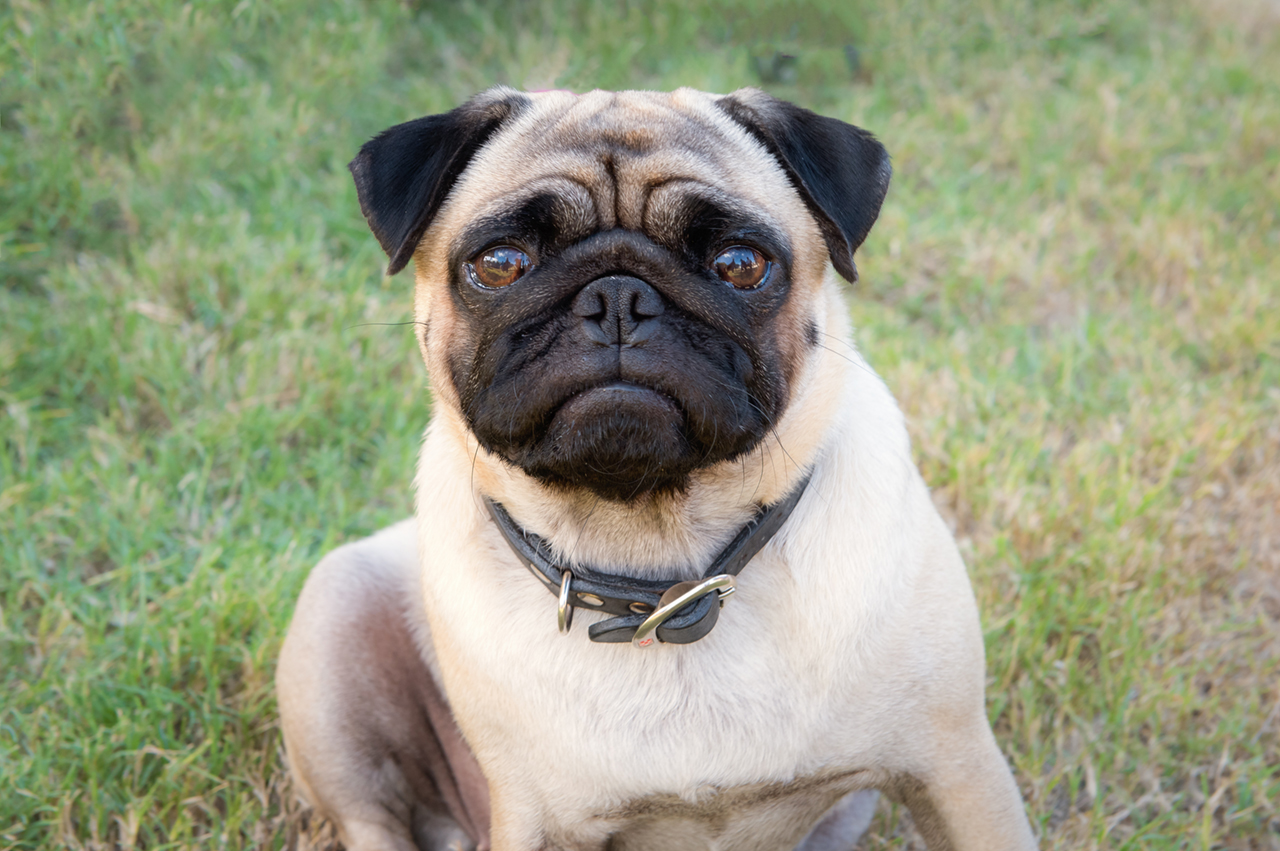
Pugs are Australia's favourite flat-faced comedians — those bulging eyes, the snorting, the dramatic couch flops, the personality that's three times bigger than their body. They're endlessly charming, endlessly loyal, and endlessly popular. But behind that squishy face is a breed in genuine health trouble. Brachycephalic Obstructive Airway Syndrome (BOAS) is THE defining health crisis for Pugs. Their artificially shortened skulls mean cramped airways, pinched nostrils, elongated soft palates, and a lifetime of laboured breathing. Corrective BOAS surgery costs $3,000–$8,000+, and that's just the airway. Pugs are also prone to corneal ulcers from those protruding eyes, skin fold infections, spinal deformities, hip dysplasia, and a terrifying breed-specific brain disease called Pug Dog Encephalitis (PDE) that has no cure. This is a breed where vet bills aren't a matter of if — they're a matter of when and how much.
We compared plans from Australia's major pet insurers, quoting for a 2-year-old Pug in Sydney, to find the best value cover for this breed.
Last updated: March 2026
Quick Comparison: Top Providers for Pugs
| Provider | Monthly Est. | Annual Limit | Excess | Benefit % | BOAS Covered | Waiting (Illness) | Our Take |
|---|---|---|---|---|---|---|---|
| Bow Wow Meow ⭐ | ~$140–190 | Up to $30,000 | $0–$200 | Up to 90% | ✅ Yes | 30 days | Best overall — $30,000 limit handles BOAS + eye surgeries in the same year |
| PetInsuranceAustralia | ~$130–175 | Up to $20,000 | $0–$200 | Up to 80% | ✅ Yes | 30 days | 2 months free promo, genuine breed expertise |
| Petcover | ~$120–160 | Up to $20,000 | $100–$300 | Up to 80% | ✅ Yes | 30 days | Good mid-range value with flexible tiers |
| RSPCA Pet Insurance | ~$110–155 | Up to $20,000 | $0–$200 | Up to 80% | ✅ Yes | 30 days | Supports animal welfare, solid cover |
| Budget Direct | ~$95–130 | Up to $12,000 | $0 fixed | 80% | ✅ Yes | 30 days | Cheapest option — but $12K limit is tight for a breed this expensive |
⚠️ Premiums are estimates based on a 2-year-old desexed Pug in Sydney (2000 postcode). Pugs are classified as a high-risk brachycephalic breed by most insurers, which increases premiums. Your actual quote will vary by age, location, and cover level. Always get a personalised quote.
Why Pugs Need Comprehensive Insurance
Let's be direct: Pugs are one of the most health-compromised breeds in existence. Their flat faces aren't just cute — they're the result of generations of selective breeding that prioritised appearance over the ability to breathe, see, and regulate body temperature. BOAS is to Pugs what IVDD is to Dachshunds — except instead of a sudden emergency, it's a chronic condition that often gets progressively worse, with surgery being the only real solution for moderate-to-severe cases.
If you also own or are considering a French Bulldog, the health profile is similar — both are brachycephalic breeds with airway, eye, and spinal concerns. Pugs are typically a bit cheaper to insure than Frenchies (smaller body, slightly lower surgical costs), but the list of breed-specific conditions is just as long.
Common Pug Health Issues & Typical Vet Costs
| Condition | What It Is | Typical Cost |
|---|---|---|
| BOAS (Brachycephalic Obstructive Airway Syndrome) | Obstructed airways from stenotic nares, elongated soft palate, and everted laryngeal saccules — THE defining Pug health crisis | $3,000–$8,000+ (surgery) |
| Corneal Ulcers | Those bulging eyes are highly exposed — scratches, ulcers, and infections are extremely common | $800–$3,000+ per episode |
| Proptosis (Eye Prolapse) | The eyeball partially or fully displaces from the socket — a genuine emergency in Pugs | $1,500–$4,000 (emergency surgery) |
| Skin Fold Dermatitis | Chronic infection and irritation in facial and body skin folds | $500–$2,000/year (ongoing) |
| Pug Dog Encephalitis (PDE) | Fatal inflammatory brain disease unique to Pugs — no cure exists | $2,000–$5,000+ (diagnosis + palliative care) |
| Hemivertebrae | Malformed "butterfly" vertebrae causing spinal cord compression — common in screw-tailed breeds | $3,000–$8,000+ (surgery if symptomatic) |
| Hip Dysplasia | Malformed hip joint causing pain and mobility issues | $1,500–$5,000 per hip |
| Obesity | Pugs gain weight incredibly easily, worsening BOAS, joint issues, and heat intolerance | $1,000–$3,000+/year (management) |
| Dental Disease | Overcrowded teeth in a shortened jaw lead to early decay and extractions | $800–$3,000+ per dental |
| Heat Stroke | Brachycephalic dogs can't cool themselves efficiently — Australian summers are genuinely dangerous | $500–$5,000 (emergency treatment) |
| Keratoconjunctivitis Sicca (Dry Eye) | Insufficient tear production causing chronic eye irritation | $500–$1,500/year (ongoing) |
The BOAS Problem — Understanding the Risk
BOAS is the reason Pugs need insurance more urgently than most breeds. Here's what every Pug owner needs to understand:
What happens: Pugs have skulls that are dramatically shortened compared to their ancestors, but the soft tissue inside hasn't shrunk to match. The result is narrowed nostrils (stenotic nares), an overly long soft palate that partially blocks the airway, and sometimes collapsed or everted laryngeal saccules. Your Pug is essentially trying to breathe through a straw — all day, every day. Over time, the constant effort to breathe causes secondary damage, and the airway can progressively collapse.
How common: Studies suggest that over 50% of Pugs show clinically significant signs of BOAS, and some researchers put the figure even higher. The breed standard itself — that extremely flat face — is the cause. Even "well-bred" Pugs with slightly longer muzzles are at risk.
The cost breakdown of BOAS:
- Initial diagnosis (endoscopy, imaging): $500–$1,500
- Stenotic nares surgery (widening the nostrils): $1,000–$2,500
- Soft palate resection: $2,000–$5,000
- Combined BOAS surgery (nares + palate + saccules): $3,000–$8,000+
- Post-operative monitoring and recovery: $500–$1,500
- Ongoing management (weight control, avoiding heat): Lifetime commitment
The progressive nature: Unlike a sudden emergency, BOAS often starts with "normal Pug noises" — the snoring, the snorting, the heavy breathing. Many owners assume this is just how Pugs are. It's not normal. It's a symptom. And without surgical intervention, BOAS tends to worsen with age, potentially leading to laryngeal collapse — which is significantly harder and more expensive to treat.
It's not just breathing. BOAS affects your Pug's ability to exercise, regulate body temperature, eat comfortably, and sleep. Many Pugs with untreated BOAS develop sleep apnoea, which means they're chronically exhausted. Quality of life is the real cost here.
The Eye Emergency Risk
Pugs' large, prominent eyes are one of their most recognisable features — and one of their biggest vulnerabilities. Those shallow eye sockets mean the eyes protrude significantly, leaving them exposed to scratches, ulcers, and in extreme cases, proptosis (the eyeball popping out of the socket). This isn't rare in Pugs — it can happen from rough play, pulling on a collar, or even just bumping into furniture. Proptosis is a genuine emergency requiring immediate veterinary intervention, and corneal ulcers are one of the most common reasons Pug owners visit the vet. If you own a Pug, you need insurance that covers eye conditions without sub-limits.
Pug Dog Encephalitis — The Silent Threat
PDE is a devastating inflammatory brain disease that occurs almost exclusively in Pugs. It's typically fatal, most commonly affecting young Pugs between 2–7 years old. Symptoms include seizures, circling, blindness, behavioural changes, and progressive neurological decline. There's no cure — treatment focuses on managing symptoms and quality of life. While PDE is less common than BOAS or eye issues, its severity and the fact that it strikes young, otherwise healthy Pugs makes it a genuine concern. Insurance won't save your Pug from PDE, but it ensures cost doesn't compound an already heartbreaking situation.
Detailed Provider Reviews
Bow Wow Meow ⭐ Editor's Pick
Best for: $30,000 annual limit handles BOAS surgery + eye emergencies + ongoing conditions in the same year
For Pug owners, the annual limit matters enormously. BOAS surgery can cost $3,000–$8,000, a corneal ulcer or proptosis emergency adds $1,500–$4,000, and that's before you factor in skin fold treatment, dental work, or any other condition. In a bad year, a Pug can easily rack up $10,000–$15,000 in vet bills across multiple conditions. Bow Wow Meow's $30,000 ceiling means you're covered even when everything happens at once.
Key features:
- Annual limit: Up to $30,000 (highest among major AU insurers)
- Benefit percentage: Choose 60%, 70%, 80%, or 90%
- No sub-limits on specific conditions — your full annual limit applies to BOAS, eye, and spinal claims
- GapOnly® claiming: Pay only the gap at the vet — invaluable during eye emergencies
- myPetPass® included: 24/7 online vet access + discounts on pet meds
- Hereditary conditions covered (subject to PDS terms)
Waiting periods:
- Accident: 2 days
- Illness: 30 days
- Cruciate ligament: 6 months
- Pre-existing conditions: Not covered
Pros:
- $30,000 limit can handle BOAS surgery, eye emergencies, AND skin/dental issues in the same year
- GapOnly means you're not scrambling for thousands upfront during a weekend eye emergency
- No sub-limits — critical when multiple body systems are at risk
- Highest benefit percentage option (90%) maximises your payout
Cons:
- Premium end of the market — Pugs aren't cheap to insure anywhere, and Bow Wow Meow sits at the top
- 6-month cruciate wait is standard but worth noting
Get a Quote from Bow Wow Meow →
Pet Insurance Australia (PIA)
Best for: Breed-specialist knowledge and promotional pricing
PIA's 2 months free promotional offer provides meaningful savings for Pug owners facing already-elevated premiums. Their breed-specific content demonstrates genuine understanding of brachycephalic health risks, and their $20,000 annual limit handles most BOAS scenarios comfortably — though it could get tight if multiple conditions flare up in the same year.
Key features:
- Annual limit: Up to $20,000
- Benefit percentage: Up to 80%
- Hereditary conditions covered (subject to PDS)
- Breed-specific health resources showing real brachycephalic awareness
Pros:
- 2 months free promotional pricing — significant on Pug premiums
- Australian-owned and operated
- $20,000 limit covers BOAS surgery + most eye emergencies comfortably
- Good customer reviews for surgical claims
Cons:
- If BOAS + eye surgery + another major condition hit the same year, $20,000 could get tight
- No GapOnly-style instant claiming for emergencies
Get a Quote from Pet Insurance Australia →
Petcover
Best for: Good value mid-range cover with flexible plan tiers
Petcover offers solid comprehensive cover at a competitive price. Three plan tiers let you scale protection to your budget. A sensible choice for Pug owners who want decent BOAS and eye coverage without paying top-tier premiums.
Key features:
- Annual limit: Up to $20,000
- Benefit percentage: Up to 80%
- Three plan tiers: Comprehensive, Standard, Accident Only
- Award-winning (Canstar, Finder)
Pros:
- Competitive pricing for brachycephalic breeds
- Flexible plan tiers — upgrade later if needed
- Good claims track record for surgical claims
Cons:
- Check PDS for sub-limits on surgical or respiratory conditions
- Lower limit than Bow Wow Meow
RSPCA Pet Insurance
Best for: Supporting animal welfare while protecting your Pug
RSPCA-branded insurance (underwritten by Hollard) delivers comprehensive cover while supporting RSPCA programs. Given the welfare concerns surrounding brachycephalic breeding, there's a certain irony here — but the cover itself is solid, with good surgical and chronic condition coverage.
Key features:
- Annual limit: Up to $20,000
- Benefit percentage: Up to 80%
- Portion of premium supports RSPCA
Pros:
- Supports animal welfare with every premium payment
- Comprehensive cover including hereditary conditions
- $20,000 limit handles most BOAS and eye surgery scenarios
Cons:
- Not the cheapest option
- Limited online claiming tools compared to Bow Wow Meow
Get a Quote from RSPCA Pet Insurance →
Budget Direct
Best for: Lowest premiums — but the $12,000 limit is a real concern for Pugs
Budget Direct is the most affordable option, but for Pugs specifically, we have reservations. BOAS surgery alone can cost $3,000–$8,000, and when you add eye emergencies ($1,500–$4,000), skin fold management, and dental work, you can easily approach $12,000 in a single year — meaning your annual limit is exhausted with little room for anything else. If your Pug is young, healthy, and you're primarily looking for accident cover with basic illness protection, Budget Direct works. But for a breed with this many known health risks, the savings on premiums may cost you more in the long run.
Key features:
- Annual limit: Up to $12,000
- Benefit percentage: 80%
- $0 excess option
- 15% online discount
Pros:
- Cheapest comprehensive option for Pugs
- No excess option available
- Simple, straightforward plans
Cons:
- $12,000 annual limit is a genuine concern — BOAS surgery + one eye emergency could exhaust your cover
- Fewer plan customisation options
- Check PDS for sub-limits on respiratory/surgical conditions
Get a Quote from Budget Direct →
How We Compared These Plans
We evaluated each insurer based on criteria specifically relevant to Pug owners:
- Annual limit adequacy for BOAS + multi-system conditions — the single most critical factor. Pugs don't just have one health risk — they have airways, eyes, skin, spine, and brain all on the list. Can the policy handle multiple claims in one year?
- Hereditary condition coverage — BOAS, eye conditions, and hemivertebrae are directly linked to the Pug's genetic structure
- Emergency claiming experience — eye emergencies and heat stroke require immediate treatment. How easy is it to authorise care fast?
- Chronic condition coverage — skin fold dermatitis, dry eye, and obesity management are ongoing costs for years
- Premium cost — balanced against actual protection level
- Waiting periods — standard 30 days for illness across all providers
All quotes were estimated for a 2-year-old desexed Pug in Sydney (postcode 2000) in March 2026 on comprehensive/accident+illness cover. Pugs are priced as a high-risk brachycephalic breed — similar to French Bulldogs but typically 15–25% cheaper due to their smaller size.
What to Look for in Pug Insurance
✅ Must-Haves
- Adequate annual limit ($20,000+ minimum, $30,000 ideal) — Pugs have multiple expensive conditions that can compound in a single year. BOAS + eyes + skin can easily exceed $10,000
- Hereditary & congenital condition coverage — BOAS, hemivertebrae, and most Pug eye conditions are directly linked to their genetics. If hereditary conditions are excluded, you're essentially paying for a policy that won't cover the things most likely to go wrong
- No sub-limits on surgical or respiratory treatment — some policies cap surgical claims separately from the main annual limit. Useless for a breed that may need airway surgery, eye surgery, and dental surgery in the same year
- Eye condition coverage — this is Pug-specific. Check that corneal ulcers, dry eye, and emergency eye procedures are covered without specific exclusions
- Chronic condition coverage — skin fold dermatitis and dry eye are ongoing, not one-off events
⚠️ Watch Out For
- Pre-existing condition exclusions — insure your Pug puppy early. If your vet notes any breathing difficulty, nostril narrowing, eye discharge, or skin issues, related claims could be excluded permanently
- Brachycephalic-specific exclusions — some budget policies exclude or limit claims related to brachycephalic conditions. Read the PDS carefully — if BOAS isn't explicitly covered, the policy is essentially worthless for a Pug
- Sub-limits on surgical procedures — a policy might have a $20,000 annual limit but cap surgical claims at $5,000 — nowhere near enough for BOAS correction
- Waiting periods for respiratory conditions — most insurers apply a standard 30-day illness wait, but check for any additional respiratory-specific exclusions
- Bilateral condition clauses — if one eye develops a corneal ulcer, some insurers might classify the other eye's future issues as "related"
💡 Pro Tips for Pug Owners
- Insure as a puppy (8–12 weeks) — BOAS symptoms can appear within the first year, and PDE can strike from age 2. Get cover before any symptoms hit vet records
- Keep your Pug lean — seriously — obesity makes everything worse for Pugs. It worsens BOAS (more tissue compressing the airway), increases joint stress, raises heat stroke risk, and shortens lifespan. A lean Pug is a healthier Pug. Period.
- Use a harness, never a collar — collars put pressure on the throat and airway. For a brachycephalic breed already struggling to breathe, this is dangerous. A well-fitted harness is non-negotiable
- Manage heat exposure — Australian summers are genuinely life-threatening for Pugs. They can't pant effectively to cool down. Walk early morning or after dark, always carry water, and never leave a Pug in a car. Heat stroke kills brachycephalic dogs faster than you'd think
- Clean skin folds daily — those adorable facial wrinkles trap moisture and bacteria. Daily cleaning with a gentle wipe prevents chronic dermatitis and infections
- Know the eye emergency signs — squinting, pawing at the eye, cloudiness, visible swelling, or (worst case) the eye visibly displaced. Corneal ulcers can deteriorate rapidly. Don't wait until morning — see an emergency vet immediately
- Prioritise annual limit over premium savings — saving $40/month on premiums means nothing when you're facing $8,000 in BOAS surgery plus a $3,000 eye emergency. For Pugs, spend more on your limit
- Ask your vet about early BOAS assessment — some vets can assess BOAS severity at the puppy stage. Early surgical intervention (particularly nares widening) can prevent progressive airway damage and is often cheaper than waiting until the condition worsens
Frequently Asked Questions
How much does pet insurance cost for a Pug in Australia?
Expect to pay between $95 and $190 per month ($1,140–$2,280/year) for comprehensive cover, depending on your dog's age, location, and plan level. Pugs are classified as a high-risk brachycephalic breed by most insurers, so premiums are significantly higher than average small breeds — though typically 15–25% less than French Bulldogs due to their smaller size.
Does pet insurance cover BOAS surgery for Pugs?
Yes — comprehensive policies cover BOAS including diagnostics (endoscopy, imaging), surgery (stenotic nares correction, soft palate resection), and post-operative care, provided symptoms first appear after the waiting period (typically 30 days for illness). The critical requirement is that no breathing issues are noted in your Pug's vet records before the policy starts, otherwise it may be classified as pre-existing.
Does pet insurance cover eye problems in Pugs?
Yes — most comprehensive policies cover eye conditions including corneal ulcers, proptosis (eye prolapse), dry eye (KCS), and cherry eye. These are illness claims subject to the standard waiting period. However, always check the PDS for specific eye condition exclusions or sub-limits, as some budget policies may restrict coverage.
Is pet insurance worth it for a Pug?
Without question. Pugs have one of the longest lists of breed-specific health risks of any dog. With BOAS surgery costing $3,000–$8,000+, eye emergencies at $800–$4,000, and the possibility of spinal, joint, or neurological conditions on top, a single bad year can generate $10,000–$15,000+ in vet bills. Even at $190/month, you'd pay ~$2,280/year for cover that could save you many times that. For more on the general value proposition, see our guide: Is Pet Insurance Worth It in Australia?
Can I get pet insurance if my Pug already has breathing problems?
You can still get insurance, but existing BOAS symptoms and potentially all respiratory conditions will be excluded as pre-existing. The policy would still cover eyes, skin, joints, dental, accidents, and other illnesses. This is exactly why insuring early — before any vet notes breathing concerns — is so critical for Pugs.
What's the best age to insure a Pug?
As early as possible — most insurers accept puppies from 8 weeks. BOAS symptoms can appear within the first year of life, and PDE (Pug Dog Encephalitis) typically strikes between ages 2–7. The earlier you insure, the fewer pre-existing exclusions you'll face. Waiting until problems appear means paying higher premiums for less coverage.
Are Pugs more expensive to insure than other small breeds?
Yes, significantly. Pugs typically cost 50–100% more to insure than non-brachycephalic small breeds like Maltese or Cavoodles. Their flat-face anatomy generates higher and more frequent claims. Within brachycephalic breeds, Pugs are generally cheaper to insure than French Bulldogs but more expensive than Cavalier King Charles Spaniels — though Cavaliers have their own serious breed-specific heart condition.
What's the average lifespan of a Pug?
Pugs typically live 12–15 years in Australia, though some studies suggest the breed average is trending downward due to health complications. This relatively long lifespan means chronic conditions like skin fold dermatitis, dry eye, and dental disease generate costs over many years — another reason adequate insurance coverage matters.
The Bottom Line
For Pug owners, Bow Wow Meow is our top recommendation. The $30,000 annual limit is critical for a breed that doesn't just have one expensive health risk — Pugs have airways, eyes, skin, spine, and brain all on the potential hit list. When BOAS surgery costs $3,000–$8,000+, a corneal ulcer adds another $800–$3,000, and you might be managing skin fold dermatitis and dental disease simultaneously, you need a limit that can handle the worst-case year. Bow Wow Meow's GapOnly claiming is also a genuine advantage when your Pug has an eye emergency at 11pm on a Saturday — you don't want to be finding $4,000 upfront.
Pet Insurance Australia is a strong second choice, especially with their 2-months-free promotion offsetting the higher brachycephalic premiums. The $20,000 limit covers most individual conditions comfortably, though it could get stretched in a particularly bad year. Budget Direct is harder to recommend for Pugs — the $12,000 limit feels inadequate for a breed where multiple body systems are at risk simultaneously.
The one thing you must do: insure your Pug as a puppy, before any health issues hit the vet records. BOAS symptoms can appear within the first year, breathing difficulties are often noted casually during routine vet visits, and once it's documented, it's a pre-existing condition. With over half of all Pugs showing signs of BOAS, the odds aren't in your favour without cover. Don't wait until the snoring gets worse — by then, it's too late for full coverage.
Related breed guides:
- Best Pet Insurance for French Bulldogs (fellow brachycephalic breed — similar health risks)
- Best Pet Insurance for Dachshunds
- Best Pet Insurance for Cavalier King Charles Spaniels
- Best Pet Insurance for Staffies
- Best Pet Insurance for Golden Retrievers
- Best Pet Insurance for Labradors
- Best Pet Insurance for German Shepherds
- Best Pet Insurance for Rottweilers
- Best Pet Insurance for Poodles & Doodle Crosses
- Best Pet Insurance for Ragdoll Cats
- Best Pet Insurance for Bengal Cats
Informational guides:
Pet Cover Guide is reader-supported. When you click our links, we may earn a commission at no extra cost to you. This doesn't influence our ratings — we recommend what we'd choose for our own pets. Read our full editorial policy.
Disclaimer: This article is general information only and does not constitute financial advice. Pricing estimates are based on industry research for brachycephalic breeds and may not reflect your exact quote. Always read the Product Disclosure Statement (PDS) before purchasing any insurance product. Get a personalised quote from each provider for accurate pricing.