
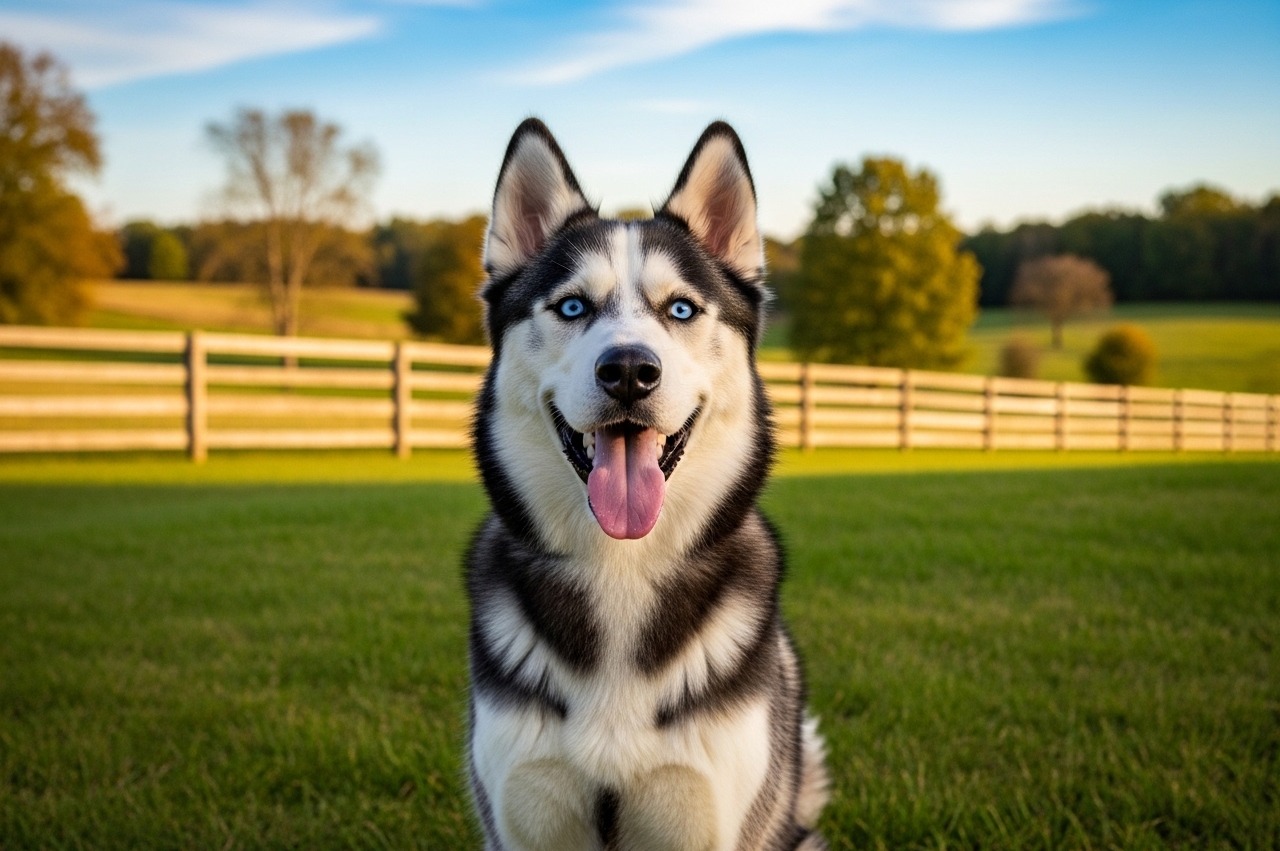
The Siberian Husky is one of Australia's most striking and beloved breeds — those piercing blue eyes, the wolf-like appearance, and a personality that's equal parts mischievous and loyal. Originally bred to pull sleds across the frozen tundra, Huskies have adapted surprisingly well to Australian life (with the help of air conditioning and plenty of shade). But beneath that gorgeous double coat lies a breed with some genuinely expensive health vulnerabilities. Eye conditions like cataracts and progressive retinal atrophy can cost $3,000–$6,000+ per eye to treat surgically. Hip dysplasia — a painful joint condition common in medium-to-large breeds — can mean $5,000–$10,000+ in surgical repair. And autoimmune disorders including zinc-responsive dermatosis and pemphigus can require lifelong medication costing $1,500–$4,000+ per year. For a breed that typically lives 12–15 years, these costs compound significantly.
We compared plans from Australia's major pet insurers, quoting for comparable medium-large breeds in Sydney, to find the best value cover for Siberian Huskies.
Last updated: March 2026
Quick Comparison: Top Providers for Huskies
| Provider | Monthly Est. | Annual Limit | Excess | Benefit % | Eye Conditions Covered | Waiting (Illness) | Our Take |
|---|---|---|---|---|---|---|---|
| Bow Wow Meow ⭐ | ~$85–130 | Up to $30,000 | $0–$250 | Up to 90% | ✅ Yes | 30 days | Best overall — highest limit handles hip + eye surgery in one year |
| Budget Direct | ~$50–80 | Up to $15,000 | $0–$200 | 80% | ✅ Yes | 30 days | Best value — solid cover at the lowest price |
| Pet Circle Insurance | ~$95–140 | Up to $25,000 | $0–$200 | Up to 85% | ✅ Yes | 30 days | Strong mid-range, good claims experience |
| RSPCA Pet Insurance | ~$80–120 | Up to $20,000 | $0–$200 | Up to 80% | ✅ Yes | 30 days | Solid cover, supports animal welfare |
| PetInsuranceAustralia | ~$75–115 | Up to $20,000 | $0–$200 | Up to 80% | ✅ Yes | 30 days | 2 months free promo, breed-savvy staff |
⚠️ Premiums are estimates based on comparable medium-large breed quotes (German Shepherd, Labrador) for a 3-year-old desexed male in Sydney (2000 postcode) obtained in March 2026. Siberian Husky premiums typically fall in a similar range. Your actual quote will vary by age, location, and cover level. Always get a personalised quote.
Why Huskies Need Insurance
Siberian Huskies are generally robust dogs — they were bred for endurance in extreme conditions, after all. But they carry a specific set of genetic vulnerabilities that can generate serious vet bills, particularly around their eyes, joints, and immune system.
Common Husky Health Issues & Typical Vet Costs
| Condition | What It Is | Typical Cost |
|---|---|---|
| Cataracts | Hereditary juvenile cataracts are extremely common in Huskies — clouding of the lens that causes progressive blindness. Can appear as early as 3 months old. | $3,000–$6,000+ per eye (surgery) |
| Progressive Retinal Atrophy (PRA) | Inherited degeneration of the retina leading to complete blindness. No surgical cure — management only. | $1,000–$3,000 (diagnosis + ongoing monitoring) |
| Hip Dysplasia | Abnormal development of the hip joint — causes pain, lameness, and arthritis. Common in medium-to-large breeds. | $5,000–$10,000+ (total hip replacement) or $2,000–$5,000 (FHO surgery) |
| Zinc-Responsive Dermatosis | Huskies have a unique inability to absorb zinc properly, causing crusty, scaly skin lesions — especially around the face and feet. Lifelong condition. | $500–$1,500/year (ongoing supplementation + flare treatment) |
| Autoimmune Disorders | Pemphigus, lupus, and uveodermatologic syndrome (VKH-like) — the immune system attacks the body's own tissues. | $2,000–$5,000+ (diagnosis) + $1,500–$4,000/year (ongoing management) |
| Hypothyroidism | Underactive thyroid — causes weight gain, lethargy, skin problems, and coat loss. Common in Huskies over 5 years. | $500–$1,500 (diagnosis) + $300–$800/year (lifelong medication) |
| Corneal Dystrophy | Another hereditary eye condition — lipid deposits in the cornea that can impair vision. | $1,000–$3,000 (treatment + monitoring) |
| Bloat (GDV) | Gastric dilatation-volvulus — the stomach twists, cutting off blood supply. Life-threatening emergency requiring immediate surgery. | $5,000–$10,000+ (emergency surgery) |
| Laryngeal Paralysis | Paralysis of the larynx muscles — causes breathing difficulty, voice changes, exercise intolerance. More common in older Huskies. | $3,000–$6,000 (surgery) |
| Epilepsy | Idiopathic seizures — Huskies have a higher genetic predisposition than many breeds. | $500–$2,000 (diagnosis) + $500–$1,500/year (ongoing medication) |
The Eye Problem Every Husky Owner Must Know About
If there's one condition that defines the Husky breed from an insurance perspective, it's hereditary cataracts. Unlike cataracts in older dogs of any breed, Husky cataracts are genetic and can appear incredibly young — sometimes as early as 3–6 months of age.
Why this matters for insurance: Juvenile cataracts in Huskies are so well-documented that insurers know about them. This makes timing critical. If you get insurance before any eye examination reveals early cataract formation, you're covered. If a vet or ophthalmologist notes even the faintest lens opacity before your policy starts, that's a pre-existing condition — and bilateral cataracts (both eyes) could mean $6,000–$12,000 in surgery you'll pay entirely out of pocket.
The practical advice: Insure your Husky puppy within the first week of bringing them home — ideally before their first comprehensive vet check. Some breeders include eye screening results with the puppy; if your breeder's ophthalmologist noted anything, mention it to your insurer upfront.
Approximately 10–15% of Siberian Huskies develop hereditary cataracts at some point in their lives. That's not a small number — it's roughly 1 in 7 to 1 in 10 dogs.
Hip Dysplasia — The Medium-Large Breed Tax
While Huskies aren't as prone to hip dysplasia as German Shepherds or Rottweilers, it's still a significant risk for the breed. Huskies are athletic dogs built for running — a dysfunctional hip joint doesn't just cause pain, it fundamentally changes their quality of life.
Most insurers cover hip dysplasia surgery, but watch for:
- Waiting periods: Many insurers have a specific 6-month orthopaedic/cruciate waiting period
- Pre-existing exclusions: If X-rays show any hip abnormality before your policy starts, it's excluded
- Sub-limits: Some budget plans cap orthopaedic claims at $3,000–$5,000 — not enough for a total hip replacement
For Huskies, getting insurance before 12 months of age (when most hip issues first become detectable) is the smartest move.
Autoimmune Disorders — Huskies' Hidden Cost Centre
Huskies are disproportionately affected by autoimmune conditions compared to most breeds. Zinc-responsive dermatosis is so closely associated with the breed that it's sometimes called "Husky dermatosis." These conditions are chronic, meaning you're not paying for one surgery — you're paying for years of specialist consultations, immunosuppressive drugs, and flare-up management.
A single year of managing pemphigus or VKH-like syndrome can easily cost $3,000–$5,000 in medication and vet visits. Over a Husky's 12–15 year lifespan, that's potentially $30,000–$50,000+ in treatment costs. This is where insurance with high annual limits truly pays for itself.
Detailed Provider Reviews
Bow Wow Meow ⭐ Editor's Pick
Best for: Highest annual limit ($30,000) — critical for Huskies facing multiple conditions simultaneously
For Husky owners, the real financial risk isn't a single emergency — it's the year your dog needs cataract surgery ($6,000) AND gets diagnosed with an autoimmune disorder ($3,000+ in diagnostics plus ongoing treatment) AND develops a hip issue ($5,000+). That scenario isn't far-fetched for this breed, and Bow Wow Meow's $30,000 ceiling gives you genuine breathing room.
Key features:
- Annual limit: Up to $30,000 (highest among major AU insurers)
- Benefit percentage: Choose 60%, 70%, 80%, or 90%
- No sub-limits on specific conditions
- GapOnly® claiming: Pay only your portion at the vet
- Hereditary conditions covered including cataracts, hip dysplasia, autoimmune disorders
- Monthly premium: ~$85–130 for a mid-tier plan (based on comparable breed data)
Waiting periods:
- Accident: 2 days
- Illness: 30 days
- Cruciate ligament: 6 months
- Pre-existing conditions: Not covered
Pros:
- $30,000 limit genuinely handles a worst-case Husky year
- GapOnly means no scrambling for cash at the emergency vet
- 90% benefit option maximises reimbursement
- No sub-limits on individual conditions — the full annual limit applies to everything
Cons:
- Premium end of the market — though for a medium-large breed, still reasonable compared to insuring a French Bulldog (which can cost $280+/month)
- 6-month cruciate/orthopaedic wait is standard across the industry
Get a Quote from Bow Wow Meow →
Budget Direct
Best for: Lowest premiums — great value if you want comprehensive cover without breaking the bank
Budget Direct consistently comes in cheapest for medium-large breeds. For Huskies, expect premiums starting around $50–65/month for a standard plan with $15,000 annual limit. The $0 excess option means every claim is straightforward — no excess to worry about.
Key features:
- Annual limit: Up to $15,000
- Excess: $0–$200 (choose your level)
- Benefit percentage: 80% fixed
- Hereditary conditions covered (subject to PDS terms)
- Simple, clear plan structure
- Monthly premium: ~$50–80 (based on comparable breed data)
Waiting periods:
- Accident: 2 days
- Illness: 30 days
- Cruciate: 6 months
- Pre-existing conditions: Not covered
Pros:
- Typically the cheapest option for medium-large breeds
- $15,000 limit handles most individual conditions well
- $0 excess option simplifies every claim
- Straightforward plan — you know exactly what you're getting
Cons:
- $15,000 limit could be tight in a year with multiple major conditions (cataract surgery + hip treatment could approach this alone)
- Only 80% benefit — no option to increase
- Less plan flexibility than Bow Wow Meow
- Some condition sub-limits (e.g., cruciate at $3,500) may not cover full surgery costs
Get a Quote from Budget Direct →
Pet Circle Insurance
Best for: Strong mid-range option with good claims experience
Pet Circle has built a solid reputation in the Australian pet space. Their comprehensive plan offers $25,000 annual limit — enough headroom for most Husky health scenarios without the premium price tag of Bow Wow Meow.
Key features:
- Annual limit: Up to $25,000
- Benefit percentage: Up to 85%
- Hereditary conditions covered (subject to PDS terms)
- Online claims portal — straightforward digital-first experience
- Monthly premium: ~$95–140 (based on comparable breed data)
Waiting periods:
- Accident: 2 days
- Illness: 30 days
- Cruciate: 6 months
- Pre-existing conditions: Not covered
Pros:
- $25,000 limit is generous — handles most multi-condition years
- Good digital claims experience
- Pet Circle is a trusted name in Australian pet care
- Competitively priced for the coverage level
Cons:
- 85% benefit cap means 15% out of pocket on every claim
- Premiums are in the higher range for medium-large breeds
- Fewer plan customisation options than Bow Wow Meow
RSPCA Pet Insurance
Best for: Solid comprehensive cover while supporting animal welfare
RSPCA Pet Insurance provides reliable cover with the added benefit that a portion of premiums supports RSPCA animal welfare programs. Their plans cover hereditary conditions including the eye and joint issues Huskies are prone to.
Key features:
- Annual limit: Up to $20,000
- Benefit percentage: Up to 80%
- Hereditary conditions covered (subject to PDS terms)
- Multi-pet discounts available
- Monthly premium: ~$80–120 (based on comparable breed data)
Waiting periods:
- Accident: 2 days
- Illness: 30 days
- Cruciate: 6 months
- Pre-existing conditions: Not covered
Pros:
- Premiums support RSPCA — genuine welfare impact
- $20,000 limit is adequate for most Husky health needs
- Multi-pet discount useful if you have multiple pets
- Well-known, trusted brand
Cons:
- 80% benefit cap means 20% out of pocket
- $20,000 could be tight for a Husky with cataracts + hip dysplasia in the same year
- Not the cheapest option in the market
Get a Quote from RSPCA Pet Insurance →
Pet Insurance Australia (PIA)
Best for: Breed-specialist knowledge and promotional pricing
PIA often runs introductory offers (like 2 months free) that can significantly reduce your first-year costs. They have genuine expertise with breed-specific conditions, which means claims for Husky conditions like hereditary cataracts tend to be processed smoothly.
Key features:
- Annual limit: Up to $20,000
- Benefit percentage: Up to 80%
- Hereditary conditions covered (subject to PDS terms)
- Breed-specific knowledge — staff familiar with Husky health issues
- 2 months free promotional offer (check availability)
- Monthly premium: ~$75–115 (based on comparable breed data)
Waiting periods:
- Accident: 2 days
- Illness: 30 days
- Cruciate: 6 months
- Pre-existing conditions: Not covered
Pros:
- Promotional pricing makes the first year very affordable
- Genuine breed knowledge helps during claims
- $20,000 limit solid for most scenarios
- Straightforward claims process
Cons:
- Standard pricing after promo may increase
- 80% benefit cap
- Smaller brand — less name recognition
Get a Quote from Pet Insurance Australia →
How We Compared
We assessed each provider based on:
- Monthly premiums for comparable medium-large breeds (German Shepherds, Labradors) in Sydney — Huskies typically fall in a similar pricing band
- Annual limits — critical for a breed that can face multiple expensive conditions in the same year
- Hereditary condition cover — cataracts, hip dysplasia, and autoimmune disorders must be included
- Eye condition cover — Huskies' most breed-specific risk
- Waiting periods and exclusions relevant to Husky conditions
- Claims experience based on owner reviews and industry reputation
Our pricing estimates are derived from real quotes for comparable medium-large breeds obtained in March 2026. Husky premiums typically align with German Shepherds, Labradors, and Border Collies due to similar size and risk profiles.
What to Look for in Husky Pet Insurance
Annual Limit
For Huskies, we recommend a minimum $20,000 annual limit. If you want genuine peace of mind against a year with cataract surgery ($6,000+) plus hip treatment ($5,000+) plus ongoing autoimmune management ($3,000+), aim for $25,000–$30,000.
Hereditary Condition Cover
This is non-negotiable for Huskies. Confirm your plan covers hereditary and congenital conditions — the breed's most expensive health issues (cataracts, hip dysplasia, autoimmune disorders) are all genetic. If a plan excludes hereditary conditions, walk away.
Eye Condition Cover
Specifically confirm cataract surgery is covered as a medical condition (not cosmetic), and that bilateral treatment (both eyes) doesn't have special exclusions.
Ongoing/Chronic Condition Cover
Autoimmune disorders like zinc-responsive dermatosis and hypothyroidism require lifelong treatment. Make sure your policy covers ongoing conditions year after year — not just the initial diagnosis.
Benefit Percentage
At 80% benefit, a $10,000 hip replacement means you pay $2,000. At 90%, you pay $1,000. Over a Husky's lifetime, the difference between 80% and 90% can be thousands of dollars.
Insurance Tips Specific to Husky Owners
-
Insure before the first vet check. Hereditary cataracts can be detected very young. Get your policy active before any eye examination — even a routine puppy check — notes lens changes.
-
Request an ophthalmology clearance from your breeder. Reputable Husky breeders should test breeding stock with the Australian Canine Eye Scheme (ACES). This helps you understand your puppy's genetic risk, but remember — even cleared parents can produce affected offspring.
-
Don't skip the zinc. Many Husky owners supplement with zinc proactively. Discuss with your vet — it's cheap insurance against the skin condition Huskies are uniquely prone to.
-
Keep them cool. Huskies in Australia face heat stress that their Siberian ancestors never dealt with. Heat exhaustion is an emergency, and repeated overheating can trigger or worsen autoimmune flares. Always have shade and water available.
-
Watch their weight. Huskies should be lean and athletic (20–27kg for males). Extra weight accelerates hip dysplasia progression and puts more stress on joints that may already be compromised.
-
Secure your yard. Huskies are legendary escape artists. Injuries from escaping — hit by car, dog fights, lacerations from fences — are all accident claims your insurance will cover, but prevention is better than treatment.
-
Budget for what insurance doesn't cover. Routine grooming ($80–$150 every 6–8 weeks), especially during coat blowing season, annual health checks, and preventive care add up alongside your premiums.
How Much Does It Cost to Insure a Husky?
Based on comparable medium-large breed data from March 2026:
| Cover Level | Monthly Est. | Annual Est. |
|---|---|---|
| Basic (accident only) | ~$25–45 | ~$300–540 |
| Standard (accident + illness) | ~$55–90 | ~$660–1,080 |
| Comprehensive (high limits, 80-90%) | ~$90–140 | ~$1,080–1,680 |
Huskies sit in the mid-range for insurance costs among medium-large breeds. They're typically cheaper to insure than brachycephalic breeds like French Bulldogs or cancer-prone breeds like Rottweilers, but more expensive than very low-risk breeds like Border Collies. The eye condition risk is the main factor that keeps Husky premiums slightly above average.
Siberian Husky Breed Profile
| Detail | Info |
|---|---|
| Average Lifespan | 12–15 years |
| Average Weight | Males: 20–27 kg / Females: 16–23 kg |
| Height | Males: 53–60 cm / Females: 51–56 cm |
| Temperament | Friendly, outgoing, mischievous, pack-oriented, independent |
| Exercise Needs | Very high — minimum 1–2 hours daily, thrives with running/hiking |
| Grooming | Heavy — double coat blows twice yearly, regular brushing essential |
| Common Health Issues | Hereditary cataracts, PRA, hip dysplasia, zinc-responsive dermatosis, autoimmune disorders, hypothyroidism |
| Insurance Risk Level | Moderate-high — hereditary eye conditions and autoimmune disorders drive the risk profile |
| Heat Tolerance | Low — need air conditioning and shade in Australian summers |
Frequently Asked Questions
Does pet insurance cover cataracts in Huskies?
Yes — most comprehensive pet insurance plans in Australia cover cataract surgery as a medical condition, provided the cataracts weren't diagnosed before your policy started. Hereditary juvenile cataracts are common in Siberian Huskies and can appear as early as 3–6 months of age, which is why insuring your Husky before their first comprehensive eye exam is so important. Surgery costs $3,000–$6,000+ per eye, making this one of the biggest reasons to insure a Husky.
How much does it cost to insure a Siberian Husky in Australia?
Comprehensive pet insurance for a Siberian Husky typically costs between $55–140 per month depending on your chosen provider, annual limit, excess, and benefit percentage. Huskies are a medium-large breed and sit in the mid-range for insurance pricing — more affordable than brachycephalic breeds like French Bulldogs or Pugs, but slightly higher than some other medium breeds due to their hereditary eye condition risk.
Is pet insurance worth it for a Siberian Husky?
Absolutely. Between hereditary cataracts ($3,000–$6,000+ per eye), hip dysplasia ($5,000–$10,000+ for surgery), and autoimmune conditions that can cost $3,000–$5,000+ per year to manage, the potential lifetime vet costs for a Husky easily reach $20,000–$50,000+. Insurance turns these potentially devastating bills into manageable monthly payments. See our detailed guide on whether pet insurance is worth it for more.
Does pet insurance cover hip dysplasia in Huskies?
Yes — hip dysplasia surgery is covered by most comprehensive pet insurance plans, as it's classified as a condition rather than a pre-existing issue (unless detected before your policy started). There's typically a 30-day illness waiting period, and many insurers have a specific 6-month orthopaedic waiting period. Insure your Husky before 12 months of age — that's when hip abnormalities typically first become detectable on X-rays.
What's the best age to insure a Husky?
As young as possible — ideally at 8 weeks when you first bring them home. Insuring early is especially critical for Huskies because hereditary cataracts can be detected very young. Once a vet records any eye abnormality, it becomes a pre-existing condition excluded from all future policies. The first few weeks of ownership are your golden window.
Are Huskies expensive to insure in Australia?
Huskies are moderately priced to insure — typically $55–140/month for comprehensive cover. They're not as expensive as high-risk breeds like French Bulldogs ($140–$280+/month) or Rottweilers, but their hereditary eye conditions and autoimmune disorder risk puts them slightly above average for medium-large breeds. The good news is that Huskies are generally healthy and athletic, which keeps premiums reasonable.
Does pet insurance cover autoimmune conditions in Huskies?
Yes — autoimmune disorders like zinc-responsive dermatosis, pemphigus, and hypothyroidism are covered by comprehensive pet insurance plans as ongoing conditions, provided they weren't diagnosed before your policy started. These conditions require lifelong treatment, so it's important to choose a policy that covers chronic/ongoing conditions year after year — not just the initial diagnosis. Check your PDS to confirm ongoing condition coverage.
Can Huskies live in Australia's climate?
Yes, but they need special consideration. Huskies have a thick double coat designed for sub-zero temperatures, so Australian summers require air conditioning, plenty of shade, early morning/evening exercise only, and constant access to water. Heat stroke is a genuine emergency that insurance covers as an accident — but prevention through responsible ownership is essential. Many Australian Husky owners report their dogs adapt well with proper management.
The Bottom Line
Siberian Huskies are magnificent dogs with personalities that keep you on your toes — and a genetic health profile that warrants serious insurance consideration. Hereditary cataracts affect up to 15% of the breed, hip dysplasia is an ongoing risk for any medium-large dog, and Huskies' unique predisposition to autoimmune disorders creates the potential for significant lifetime vet costs.
Our recommendation: Get comprehensive insurance as early as possible — ideally before your puppy's first vet visit. For most Husky owners, a plan with at least a $20,000 annual limit and confirmed hereditary condition cover is the minimum. If you can afford it, the $30,000 limit from Bow Wow Meow gives you genuine protection against a worst-case year where multiple conditions strike simultaneously.
The cost of insuring a Husky — typically $60–130/month — is a fraction of what cataract surgery alone would cost. And unlike breeds where insurance feels like a gamble, Huskies' well-documented genetic conditions make pet insurance one of the smartest financial decisions you can make as an owner.
This article is for informational purposes only and does not constitute financial or veterinary advice. We may earn a commission when you click our links — this doesn't affect our ratings or recommendations. Always read the Product Disclosure Statement (PDS) before purchasing pet insurance. Prices and coverage details were accurate as of March 2026 but may change — get a personalised quote from each provider for current pricing.
Last reviewed: March 2026