
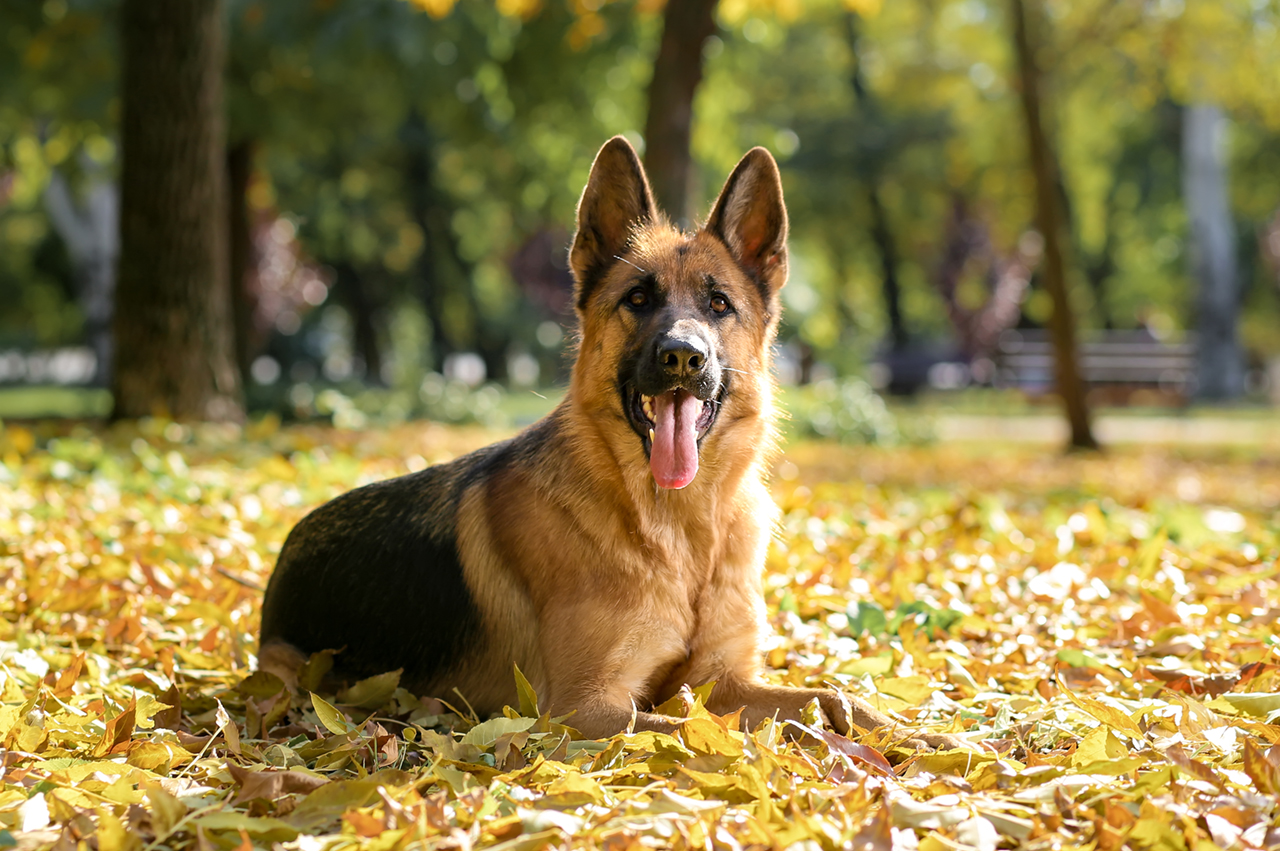
German Shepherds are Australia’s quintessential working dog — intelligent, fiercely loyal, and built with the kind of athletic drive that makes them excel at everything from police work to backyard fetch. But that powerful, sloping frame comes at a cost. German Shepherds are the poster child for hip dysplasia, with studies suggesting up to 20% of the breed will be affected. And hip dysplasia is just the start. Between elbow dysplasia, degenerative myelopathy, bloat/GDV, and a heightened cancer risk, German Shepherd owners face potential vet bills that can reach $10,000–$15,000 for a single condition. With hip replacement surgery alone costing $7,000–$15,000 per hip, the right pet insurance isn’t a luxury for GSD owners. It’s a financial necessity.
We compared plans from Australia’s major pet insurers, quoting for a 2-year-old German Shepherd in Sydney, to find the best value cover for this breed.
Last updated: March 2026
Quick Comparison: Top Providers for German Shepherds
Mid-tier plans compared for a 3-year-old male German Shepherd in Sydney (2000). Prices scraped directly from provider quote tools.
| Provider | Plan | Monthly Premium | Annual Limit | Excess | Benefit % |
|---|---|---|---|---|---|
| Pet Circle 💰 Lowest Price | Comprehensive | $78.33 | $10,000 | $150 | 70% |
| Bow Wow Meow 🛡️ Most Comprehensive | Comprehensive | $91.28 | $10,000 | $250 | 80% |
⚠️ Prices quoted March 2026 for a 3-year-old desexed male German Shepherd in Sydney (2000). Your premium will vary based on age, location, and cover level. Always get a personalised quote from each provider.
💰 = Lowest monthly premium. 🛡️ = Most comprehensive cover, determined by highest annual limit, then highest benefit %, then lowest excess.
⚠️ Premiums are estimates based on a 2-year-old desexed German Shepherd in Sydney (2000 postcode). Your actual quote will vary by age, location, and cover level. Always get a personalised quote.
Why German Shepherds Need Comprehensive Insurance
German Shepherds project strength and vitality — they’re the breed you see chasing down criminals and rescuing hikers. But behind that impressive athleticism is a breed plagued by structural and genetic vulnerabilities. Their characteristic sloped hindquarters, while part of the breed standard, contribute directly to one of the highest hip dysplasia rates of any breed. And the problems don’t stop at the hips.
Common German Shepherd Health Issues & Typical Vet Costs
| Condition | What It Is | Typical Cost |
|---|---|---|
| Hip Dysplasia | Malformed hip joint causing pain, lameness, and arthritis — affects up to 20% of German Shepherds, the breed’s defining health issue | $7,000–$15,000 per hip |
| Elbow Dysplasia | Abnormal elbow joint development causing forelimb lameness, often requiring surgical intervention | $1,500–$5,000 |
| Degenerative Myelopathy (DM) | Progressive spinal cord disease causing hind-limb weakness and eventual paralysis — no cure, GSDs are the most commonly affected breed | $1,500–$5,000 (diagnosis + ongoing management) |
| Bloat (GDV) | Gastric dilation-volvulus — a life-threatening emergency where the stomach twists. Deep-chested breeds like GSDs are at highest risk | $3,000–$10,000 |
| Cancer (Hemangiosarcoma) | Aggressive blood vessel cancer that German Shepherds are disproportionately prone to, along with osteosarcoma and lymphoma | $5,000–$15,000+ |
| Exocrine Pancreatic Insufficiency (EPI) | The pancreas stops producing digestive enzymes — German Shepherds are the most commonly affected breed by a wide margin | $1,000–$3,000/year (lifelong enzyme supplementation) |
| Perianal Fistulas | Painful, chronic draining tracts around the anus — overwhelmingly a German Shepherd condition, requiring long-term immunosuppressive treatment | $2,000–$6,000 (ongoing treatment) |
| Chronic Skin Allergies | Atopic dermatitis, environmental allergies, and food sensitivities — very common in the breed | $500–$2,000/year (ongoing) |
| Cruciate Ligament Tears (CCL) | Knee ligament rupture, common in large active breeds especially those with existing hip instability | $3,000–$7,000 per knee |
| Osteoarthritis | Degenerative joint disease — often a consequence of hip/elbow dysplasia, requiring lifelong management | $500–$3,000/year (ongoing) |
The numbers tell a stark story. A German Shepherd needing bilateral hip replacements faces $14,000–$30,000 in surgical costs alone. Add in a GDV emergency ($3,000–$10,000), lifelong EPI management ($1,000–$3,000/year), and chronic skin allergy treatment, and lifetime vet costs can easily reach $40,000–$70,000. Unlike breeds such as French Bulldogs where the costs are respiratory, or Labradors where it’s primarily joints, German Shepherds face expensive conditions across multiple body systems — making comprehensive insurance genuinely critical.
Detailed Provider Reviews
Bow Wow Meow ⭐ Most Comprehensive
Best for: High-limit cover essential for bilateral hip replacements and multi-system conditions
Bow Wow Meow’s $30,000 annual limit is the decisive factor for German Shepherd owners. When a single hip replacement costs $7,000–$15,000 and your breed has a 20% hip dysplasia rate, you need a limit that can absorb bilateral surgery in one policy year. A GSD needing both hips replaced could exhaust a $20,000 limit — let alone a $12,000 one — before you’ve even factored in the bloat emergency or the EPI diagnosis.
Key features:
- Annual limit: Up to $30,000 (highest among major AU insurers)
- Benefit percentage: Choose 60%, 70%, 80%, or 90%
- No sub-limits on specific conditions
- GapOnly® claiming: Pay only the gap at the vet — no out-of-pocket then waiting for reimbursement
- myPetPass® included: 24/7 online vet access + discounts on pet meds
- Hereditary conditions covered (subject to PDS terms)
Waiting periods:
- Accident: 2 days
- Illness: 30 days
- Cruciate ligament: 6 months
- Pre-existing conditions: Not covered
Pros:
- Highest annual limit in Australia — essential when bilateral hip replacement alone can hit $30,000
- GapOnly makes claiming painless at the vet
- No sub-limits means full cover for expensive orthopaedic and emergency conditions
- Flexible excess options to manage premium cost
Cons:
- Premium end of the market — GSDs are already expensive to insure
- 6-month cruciate wait is standard but important to note for this large, active breed
Get a Quote from Bow Wow Meow →
Pet Insurance Australia (PIA)
Best for: Breed-specialist knowledge and promotional pricing
PIA is a family-owned Australian insurer with genuine expertise across working and large breed dogs. They currently offer 2 months free for new policies — a meaningful saving when German Shepherd premiums run $120–$165/month. Their breed-specific resources show real understanding of GSD health risks, from hip dysplasia through to degenerative myelopathy.
Key features:
- Annual limit: Up to $20,000
- Benefit percentage: Up to 80%
- Hereditary conditions covered (subject to PDS)
- Breed-specific content demonstrating deep knowledge of German Shepherd health risks
Pros:
- 2 months free promotional pricing — saves $240–$330 upfront
- Australian-owned and operated
- Good customer reviews
- Covers hereditary conditions including hip dysplasia and DM
Cons:
- $20,000 annual limit could be tight if your GSD needs bilateral hip surgery plus an emergency GDV procedure in the same year
- No GapOnly-style instant claiming
Get a Quote from Pet Insurance Australia →
Petcover
Best for: Good value mid-range cover with flexible plan options
Petcover offers solid comprehensive cover at a competitive price point for German Shepherds. With three plan tiers, you can scale your cover to match your budget. A sensible option for GSD owners who want decent protection without paying top-tier premiums — though we’d recommend their highest tier given this breed’s multi-system health risks.
Key features:
- Annual limit: Up to $20,000
- Benefit percentage: Up to 80%
- Three plan tiers: Comprehensive, Standard, Accident Only
- Award-winning (Canstar, Finder)
Pros:
- Competitive pricing for German Shepherds
- Flexible plan tiers to match your budget
- Good claims history
Cons:
- Check PDS carefully for breed-specific exclusions
- $20,000 limit adequate for most scenarios, but could be stretched by bilateral hip surgery plus GDV emergency
RSPCA Pet Insurance
Best for: Supporting animal welfare while covering your GSD
RSPCA-branded insurance (underwritten by Hollard) gives you comprehensive cover while supporting RSPCA programs. German Shepherds are one of the breeds most commonly surrendered to shelters when owners can’t afford vet bills — so there’s a certain poetry in supporting the RSPCA while protecting yourself from exactly that scenario.
Key features:
- Annual limit: Up to $20,000
- Benefit percentage: Up to 80%
- Portion of premium supports RSPCA
Pros:
- Supports animal welfare with every premium payment
- Solid comprehensive cover including hereditary conditions
- Good waiting period terms
Cons:
- Not the cheapest option
- Limited online claiming tools compared to Bow Wow Meow
Get a Quote from RSPCA Pet Insurance →
Budget Direct
Best for: Lowest premiums if cost is your primary concern
Budget Direct offers the most affordable comprehensive cover for German Shepherds. However, the $12,000 annual limit is a genuine red flag for this breed. A single hip replacement can cost $7,000–$15,000 — meaning one hip could exhaust your entire annual cap, with nothing left for the second hip, the bloat surgery, or the EPI diagnosis that German Shepherds are famous for.
Key features:
- Annual limit: Up to $12,000
- Benefit percentage: 80%
- $0 excess option
- 15% online discount
Pros:
- Cheapest comprehensive option for German Shepherds
- No excess option available
- Simple, straightforward plans
Cons:
- $12,000 annual limit is dangerously low for a breed where a single hip replacement can cost $15,000
- Fewer plan customisation options
- Not recommended as sole cover for a breed with this many expensive health risks
Get a Quote from Budget Direct →
How We Compared These Plans
We evaluated each insurer based on criteria specifically relevant to German Shepherd owners:
- Hip dysplasia coverage & annual limits — the single most important factor for a breed where 1 in 5 dogs may be affected
- Hereditary & chronic condition coverage — DM, EPI, perianal fistulas, and skin allergies all require long-term treatment
- Emergency surgery limits — bloat/GDV requires immediate, expensive surgery; your limit needs to absorb this on top of ongoing conditions
- Premium cost — balanced against what you actually get
- Waiting periods — especially the 6-month cruciate ligament waiting period
- Claiming experience — ease of process, GapOnly availability
All quotes were obtained for a 2-year-old desexed German Shepherd in Sydney (postcode 2000) in March 2026 on comprehensive/accident+illness cover.
What to Look for in German Shepherd Insurance
✅ Must-Haves
- High annual limit ($20,000+, ideally $30,000) — bilateral hip replacements alone can cost $14,000–$30,000. A $30,000 limit gives you room for the hip surgery plus the GDV emergency that statistically could happen in the same year
- Hereditary & congenital condition coverage — hip dysplasia, elbow dysplasia, DM, and EPI all have strong genetic links
- No sub-limits on orthopaedic surgery — hip replacements are $7,000–$15,000 per hip; you need the full limit available
- Chronic condition coverage — EPI, perianal fistulas, and skin allergies require ongoing, year-after-year treatment; make sure your policy covers chronic/recurring conditions
⚠️ Watch Out For
- Pre-existing condition exclusions — insure your GSD young, before hip dysplasia or other issues are detected on vet records
- Cruciate ligament waiting periods — typically 6 months across all insurers; large breeds with hip instability are more prone to cruciate tears
- Annual limit adequacy — a $12,000 limit is genuinely inadequate for German Shepherds. One hip replacement can exceed this cap entirely
- Reducing benefit by age — some insurers reduce your benefit % as your dog ages, hitting hardest when degenerative conditions like DM and arthritis peak
- Exclusions on breed-specific conditions — read the PDS carefully to ensure conditions like perianal fistulas and EPI aren’t excluded
💡 Pro Tips for German Shepherd Owners
- Insure early — ideally from 8 weeks. Hip dysplasia can show clinical signs as young as 4-6 months, and once it’s on your vet records, it’s pre-existing forever
- Prioritise annual limit over low premiums — the difference between a $12,000 and $30,000 limit could be the difference between affording bilateral hip replacements or facing an impossible choice. Pay the extra $30-50/month
- Don’t skip illness cover — accident-only policies won’t cover hip dysplasia, DM, EPI, cancer, bloat, or any of the conditions that make German Shepherds expensive. Illness cover is non-negotiable for this breed
- Learn the signs of bloat/GDV — a distended abdomen, unproductive retching, and restlessness are emergencies. GSDs are one of the highest-risk breeds for GDV, and surgery must happen within hours. Insurance covers the bill, but you need to act fast
- Get hip/elbow scores early — a vet assessment at 12-18 months can identify dysplasia before it becomes a pre-existing condition. Consider PennHIP or CHEDS scoring for a thorough evaluation
- Consider a higher excess to manage premiums — a $200 excess can save $25-45/month without excessive out-of-pocket risk on a breed where individual claims run into thousands
- Watch for DM signs after age 5 — hind-limb weakness, dragging paws, and loss of coordination may indicate degenerative myelopathy. Early documentation under an existing policy ensures coverage for ongoing management
Frequently Asked Questions
How much does pet insurance cost for a German Shepherd in Australia?
Expect to pay between $85 and $180 per month ($1,020–$2,160/year) for comprehensive cover, depending on your dog’s age, location, and the plan you choose. German Shepherds are moderately expensive to insure — more than breeds like Staffies, comparable to Rottweilers, and somewhat less than brachycephalic breeds like French Bulldogs.
Does pet insurance cover hip dysplasia surgery for German Shepherds?
Yes — most comprehensive policies cover hip dysplasia treatment including total hip replacement surgery, provided the condition develops after the policy’s waiting period (typically 30 days for illness). Hip dysplasia is a hereditary condition, and most major Australian insurers now cover hereditary conditions on comprehensive plans. However, if dysplasia is detected or suspected before you take out cover, it will be excluded as pre-existing. Insure early — GSDs can show signs from 4-6 months of age.
Is pet insurance worth it for a German Shepherd?
Absolutely. German Shepherds face expensive conditions across multiple body systems — orthopaedic (hip/elbow dysplasia), neurological (DM), gastrointestinal (EPI, bloat), and oncological (hemangiosarcoma). A single hip replacement ($7,000–$15,000) can recoup years of premiums in one claim. Factor in the breed’s predisposition to bloat, cancer, and chronic conditions, and the odds of needing a significant claim over your GSD’s lifetime are extremely high.
What’s the best age to insure a German Shepherd?
As young as possible — most insurers accept puppies from 8 weeks. Insuring early means fewer pre-existing condition exclusions, lower premiums, and — critically — coverage in place before hip dysplasia can be detected. Premiums increase significantly after age 5-6, and by then many GSDs already have documented joint issues.
Is degenerative myelopathy (DM) covered by pet insurance?
DM is generally covered under comprehensive policies as it develops after the policy is in place and isn’t pre-existing. However, DM is a progressive, incurable condition requiring ongoing management (physiotherapy, mobility aids, hydrotherapy). Ensure your policy covers chronic and recurring conditions so treatment remains covered year after year, not just in the year of diagnosis.
Are German Shepherds prone to bloat?
Yes — German Shepherds are one of the highest-risk breeds for gastric dilation-volvulus (GDV), commonly called bloat. This is a life-threatening emergency where the stomach fills with gas and twists. Emergency surgery costs $3,000–$10,000 and must happen within hours. All comprehensive pet insurance policies cover GDV surgery after the standard waiting period. Some GSD owners opt for prophylactic gastropexy (stomach tacking) during desexing — check whether your policy covers preventive procedures.
What’s the average lifespan of a German Shepherd?
German Shepherds typically live 9–13 years in Australia. Joint issues often emerge from age 2-5, while cancer and degenerative myelopathy risk increases significantly after age 7-8. Comprehensive insurance becomes most valuable — and most expensive — in the later years, which is why insuring early locks in better rates.
How do German Shepherd insurance costs compare to other breeds?
German Shepherds fall in the moderate-to-high range. They’re similar in cost to Rottweilers and Golden Retrievers, and more expensive than Labradors or Staffies. They’re generally cheaper to insure than French Bulldogs or Cavalier King Charles Spaniels, which have more complex breed-specific surgical needs.
The Bottom Line
For German Shepherd owners, Bow Wow Meow is our top recommendation. The $30,000 annual limit is the key differentiator — when your breed has a 20% hip dysplasia rate and hip replacement costs $7,000–$15,000 per hip, you need a limit that can handle bilateral surgery without breaking a sweat. Add in the breed’s predisposition to bloat, cancer, and chronic conditions like EPI, and that $30,000 ceiling isn’t overkill — it’s prudent. GapOnly claiming and no sub-limits on orthopaedic surgery seal the deal.
If budget is a concern, Pet Insurance Australia (with their 2-months-free promo) or RSPCA Pet Insurance offer good cover at a lower price point with $20,000 limits that will handle most scenarios. We’d strongly caution against relying on Budget Direct’s $12,000 limit for this breed — a single hip replacement at the higher end could exceed your entire annual cap before you’ve even started on the second hip.
The single most important thing: insure your German Shepherd early. Hip dysplasia can show signs from just 4-6 months of age, degenerative myelopathy is genetic, and EPI can emerge at any time. Once these conditions are on your vet records, they’re pre-existing — and with a breed that faces this many expensive health risks across this many body systems, early insurance isn’t just smart. It’s the difference between being able to treat your dog and having to make a decision no owner should face.
Pet Cover Guide is reader-supported. When you click our links, we may earn a commission at no extra cost to you. This doesn’t influence our ratings — we recommend what we’d choose for our own pets. Read our full editorial policy.