
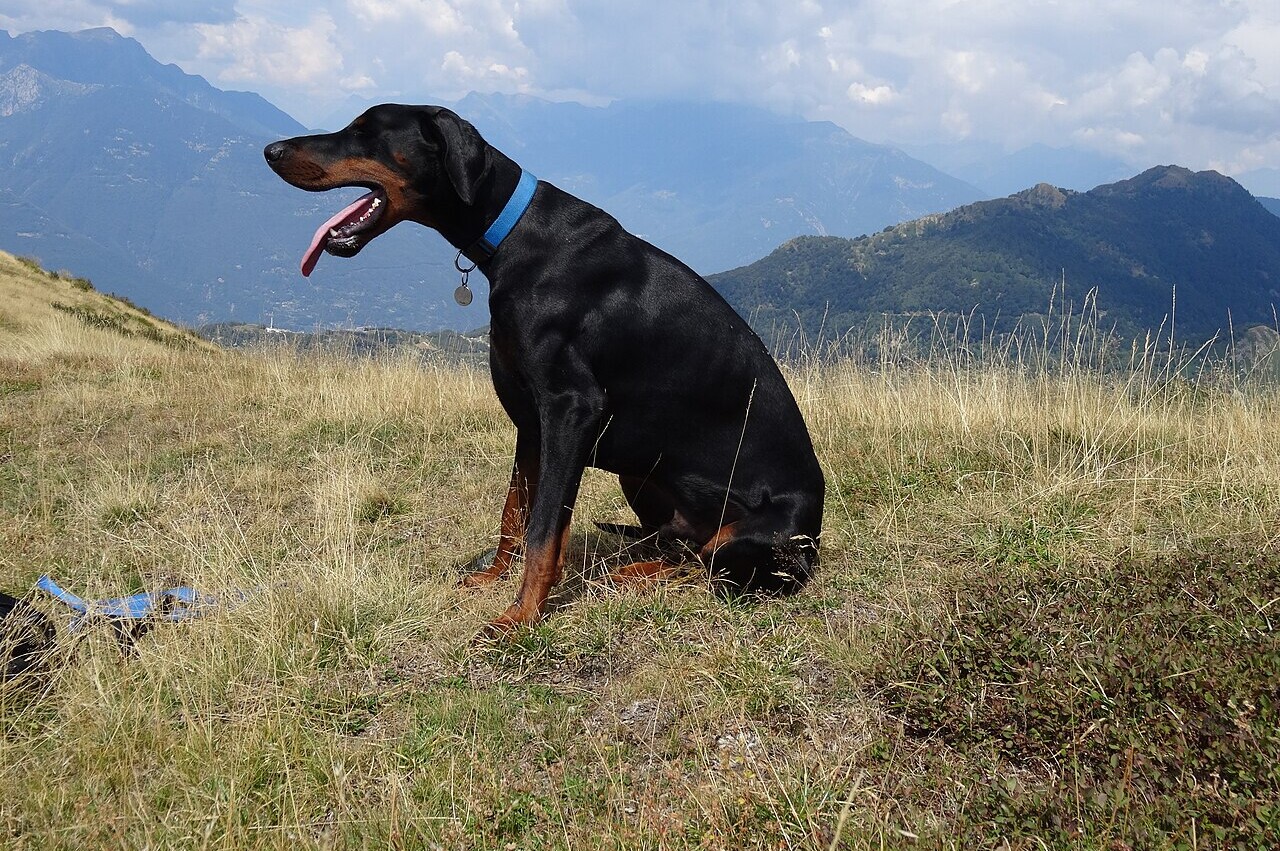
There's something magnetic about a Doberman. Lean, powerful, impossibly alert — and utterly devoted to their person. These dogs aren't just guard dogs or working dogs; in the right home, they're velcro dogs who follow you from room to room, curl up beside you on the couch, and greet you like you've been gone for a year even if it's only been five minutes. Australia's Doberman community is passionate and fiercely loyal to the breed.
But behind that sleek, muscular exterior lies one of the most cardiac-vulnerable breeds in the world. Doberman Pinschers have a staggeringly high rate of dilated cardiomyopathy (DCM) — a progressive heart disease that causes the heart muscle to weaken and enlarge. Studies estimate that up to 58% of Dobermans will develop DCM during their lifetime, making it a near-inevitability for many dogs in the breed. Add Wobbler's Syndrome (a debilitating spinal condition), Von Willebrand's Disease (a blood clotting disorder), bloat/GDV risk, and bone cancer, and you have a breed where serious, expensive veterinary care isn't a possibility — it's a probability.
A single DCM diagnosis with ongoing cardiac management can cost $5,000–$12,000 or more over a dog's lifetime. Wobbler's Syndrome surgery? $7,000–$15,000. Emergency GDV surgery? Up to $10,000. For a breed whose owners are deeply invested in their health and wellbeing, pet insurance isn't optional — it's essential.
We compared real pricing from major Australian pet insurers for a large-breed dog in Sydney to find the best coverage options for Doberman owners in 2026.
Last updated: April 2026
Quick Comparison: Top Providers for Dobermans
| Provider | Monthly Premium | Annual Limit | Excess | Benefit % | Our Take |
|---|---|---|---|---|---|
| Budget Direct ⭐ | ~$70–$112 | $12,000–$25,000 | $100–$200 | 80% | Best value — solid limits at the lowest price point for a high-risk breed |
| Bow Wow Meow | ~$88–$264 | $10,000–$30,000 | $0–$500 | 70–90% | Best flexibility — highest limits + GapOnly instant claiming |
| Pet Circle | ~$87–$218 | $10,000–$30,000 | $75–$150 | 70–90% | Best mid-range — competitive pricing with good plan variety |
⚠️ Premiums shown are indicative, based on quotes for a comparable large-breed dog (3-year-old desexed male) in Sydney (2000 postcode), sourced April 2026. Doberman-specific quotes may vary slightly. Always get a personalised quote for your dog.
Why Dobermans Need Insurance More Than Almost Any Other Breed
Let's address this head-on: DCM alone makes Dobermans one of the most medically expensive breeds to own in Australia. When you combine that with Wobbler's Syndrome, Von Willebrand's Disease, and their deep-chested GDV risk, you're looking at a breed where major veterinary expenses are statistically near-certain over a 10–13 year lifespan.
The financial stakes are high and they tend to arrive concentrated in the middle years — Dobermans often appear healthy and robust until age 5–8, when cardiac and spinal conditions typically manifest. The bills, when they arrive, can be enormous.
Common Doberman Health Issues & Typical Vet Costs
| Condition | What It Is | Typical Cost |
|---|---|---|
| Dilated Cardiomyopathy (DCM) | Progressive weakening and enlargement of the heart muscle — so prevalent in Dobermans it's often called "Doberman heart disease." Can progress from asymptomatic to severe heart failure. Requires lifelong management. | $3,000–$6,000 initial diagnosis + specialist workup; $1,500–$4,000/year ongoing medication + monitoring |
| Wobbler's Syndrome (CSM) | Cervical spondylomyelopathy — compression of the spinal cord in the neck, causing wobbly hind gait, weakness, and potential paralysis. Requires surgery in severe cases. | $7,000–$15,000 (surgical intervention); $2,000–$5,000 (medical management) |
| Von Willebrand's Disease (vWD) | Inherited blood clotting disorder — Dobermans have the highest prevalence of vWD of any breed. Can cause life-threatening bleeding during surgery or injury. | $500–$2,000 (diagnosis + testing); $1,000–$5,000+ (treatment/transfusion during bleeding events) |
| Bloat/GDV (Gastric Dilatation-Volvulus) | Deep-chested breed — the stomach fills with gas and rotates, cutting off blood supply. Life-threatening emergency requiring immediate surgery. | $5,000–$10,000 (emergency surgery + hospitalisation) |
| Osteosarcoma (Bone Cancer) | Aggressive bone cancer affecting large breeds. Dobermans are at elevated risk. Often requires amputation + chemotherapy. | $8,000–$20,000 (amputation + chemo protocol) |
| Hip Dysplasia | Malformation of the hip joint causing pain, lameness, and arthritis. Manageable medically or surgically. | $3,000–$7,000 per hip (surgery); $1,000–$3,000/year (ongoing management) |
| Hypothyroidism | Underactive thyroid causing weight gain, lethargy, coat changes, and skin issues. Requires lifelong medication. | $300–$800/year (medication + regular blood tests) |
| Progressive Retinal Atrophy (PRA) | Hereditary eye disease causing progressive vision loss and eventual blindness. No cure — management focuses on quality of life. | $1,000–$3,000 (specialist ophthalmology + ongoing monitoring) |
| Cruciate Ligament (ACL) Rupture | Tear of the knee ligament — active, muscular dogs like Dobermans are susceptible. Often requires surgical repair (TPLO). Can be bilateral. | $4,000–$7,000 per knee |
| Colour Dilution Alopecia | Blue and fawn Dobermans are particularly prone to this skin condition causing hair loss and chronic skin infections. | $500–$2,000/year (ongoing management) |
The DCM Problem — Doberman's Defining Health Challenge
Dilated cardiomyopathy is the defining health challenge of the Doberman breed. No other common breed has DCM rates this high, and the condition is so strongly associated with Dobermans that it's often described in veterinary literature specifically as "Doberman DCM."
Here's what the numbers look like:
- Prevalence: Studies suggest 58% or more of Dobermans will develop DCM during their lifetime. Some breeding lines have even higher rates.
- Age of onset: Typically diagnosed between ages 4–10, though the abnormal heart rhythm (VPCs) can often be detected years before symptoms appear.
- Phases: DCM progresses through an occult (symptom-free) phase lasting 1–3 years, then an overt phase with symptoms (exercise intolerance, coughing, fainting), then congestive heart failure. Many dogs are lost to sudden cardiac death even in the occult phase.
- Diagnosis: Holter monitor (24-hour ECG) + echocardiogram is the gold standard. Annual Holter monitoring is recommended for all Dobermans from age 3. Each assessment costs $800–$2,000.
- Treatment: Once DCM is detected, medication (pimobendan is particularly important) can extend life significantly. Dogs on pimobendan in the occult phase can gain an extra 1–2+ years of quality life. Ongoing medication costs $1,500–$3,000/year.
- Lifetime cost: From first abnormal Holter through diagnosis and years of cardiac medication and monitoring, DCM management typically costs $8,000–$20,000+ over a dog's life.
The implication for insurance: you want a policy active before DCM is detected. Once your vet notes any cardiac abnormality, it becomes a pre-existing condition excluded from coverage. The window to insure against DCM is before age 3–4. Miss that window and one of the most expensive conditions in the breed is permanently excluded.
Wobbler's Syndrome: The Other Major Doberman Condition
Cervical spondylomyelopathy (Wobbler's Syndrome) affects large and giant breeds disproportionately, with Dobermans ranking among the most commonly affected. The condition causes compression of the spinal cord in the neck, leading to a characteristic wobbly, uncoordinated rear gait — and in severe cases, front limb weakness and potential paralysis.
- Prevalence: Dobermans represent around 50% of all Wobbler's cases in dogs, despite being a relatively uncommon breed in the general population
- Onset: Typically middle-aged to older Dobermans (5–10 years)
- Surgery: The gold standard for severe cases is surgical decompression — a complex spinal procedure costing $7,000–$15,000
- Medical management: For dogs not suitable for surgery (or owners who can't access it), medical management with steroids and NSAIDs costs $2,000–$5,000 but provides less consistent outcomes
- Recurrence: Unfortunately, Wobbler's can recur after surgery, sometimes requiring repeat procedures
Wobbler's Syndrome typically strikes at the same age window as DCM — meaning Doberman owners in their dog's middle years may face both conditions concurrently.
Detailed Provider Reviews
Budget Direct ⭐ Editor's Pick
Best for: Best value comprehensive cover for a high-risk breed — the numbers work
Budget Direct is the standout value option for Doberman insurance. Their $25,000 Plus plan at ~$101/month is the cheapest way to get meaningful annual coverage for a breed facing potentially $20,000+ in DCM management alone. Over a 10-year lifespan, Budget Direct's premiums cost roughly $12,000–$13,000 — likely less than a single bad year combining DCM, Wobbler's Syndrome, and a GVD emergency.
Indicative premiums (3yo male, large breed, Sydney):
| Plan | Annual Limit | Excess | Monthly Premium |
|---|---|---|---|
| Essential | $12,000 | $200 | ~$70/mo |
| Essential | $12,000 | $100 | ~$78/mo |
| Comprehensive | $15,000 | $200 | ~$78/mo |
| Comprehensive | $15,000 | $100 | ~$86/mo |
| Plus | $25,000 | $200 | ~$101/mo |
| Plus | $25,000 | $100 | ~$112/mo |
Key features:
- Annual limit: $12,000–$25,000
- Benefit percentage: 80% across all plans
- Excess: $100 or $200 per claim
- Underwritten by Auto & General — one of Australia's largest general insurers
- Routine Care add-on available (covers check-ups, vaccinations, dental cleaning)
- Sub-limits to note: Cruciate: $3,500 on Plus plan (adequate for one TPLO, not bilateral); $25,000 limit on orthopaedic/other conditions
Waiting periods:
- Accident: 2 days
- Illness: 30 days
- Cruciate ligament: 6 months
- Pre-existing conditions: Not covered
Pros:
- Cheapest premiums by a meaningful margin — critical for a breed with near-certain major claims
- $25,000 Plus limit handles most single-condition scenarios (DCM management OR Wobbler's surgery)
- Simple plan structure with no complex decision matrix
- 80% benefit is consistent and predictable across all tiers
- Routine Care add-on covers annual cardiac screening costs partially
Cons:
- No 90% benefit option — you always pay 20% co-pay
- $12,000 Essential limit inadequate for serious Doberman conditions (Wobbler's surgery alone is $7,000–$15,000)
- $25,000 limit may be exhausted in a catastrophic year (DCM diagnosis + Wobbler's + GDV emergency)
- No GapOnly claiming — you pay upfront and claim back (challenging for $10,000+ surgeries)
- $3,500 cruciate sub-limit on Plus plan is low for bilateral TPLO ($8,000–$14,000)
Get a Quote from Budget Direct →
Bow Wow Meow
Best for: Maximum limits, GapOnly instant claiming, and highest flexibility — the premium choice for Doberman owners who want full protection
Bow Wow Meow's $30,000 annual limit is the highest available in our comparison — important for a breed where a single year could combine DCM management, Wobbler's surgery, and a GDV emergency. Their GapOnly instant claiming at participating vets is a genuine differentiator: no scrambling to find $10,000+ upfront at a specialist or emergency vet.
Indicative premiums (3yo male, large breed, Sydney):
| Annual Limit | Benefit % | $0 Excess | $250 Excess | $500 Excess |
|---|---|---|---|---|
| $10,000 | 70% | $160/mo | $88/mo | — |
| $10,000 | 80% | $193/mo | $106/mo | — |
| $10,000 | 90% | $228/mo | $125/mo | $97/mo |
| $20,000 | 80% | $212/mo | $117/mo | $91/mo |
| $20,000 | 90% | $251/mo | $138/mo | $107/mo |
| $30,000 | 80% | $223/mo | $122/mo | $95/mo |
| $30,000 | 90% | $264/mo | $145/mo | $112/mo |
Key features:
- Annual limit: $10,000–$30,000 (highest available)
- Benefit percentage: 70%, 80%, or 90%
- Excess options: $0, $250, or $500
- GapOnly — instant claims at participating vets (no upfront payment required)
- Underwritten by PetSure — Australia's largest pet insurer
- 0-day accident waiting period — immediate accident cover from day one
- Multi-pet discount available
Waiting periods:
- Accident: 0 days (immediate cover)
- Illness: 30 days
- Cruciate ligament: 6 months
- Pre-existing conditions: Not covered
Pros:
- $30,000 annual limit absorbs worst-case Doberman scenarios (DCM + Wobbler's + emergency in same year)
- 90% benefit: only 10% out-of-pocket on a $15,000 Wobbler's surgery
- GapOnly removes the stress of finding $10,000+ upfront for specialist or emergency care
- $500 excess brings the $30K/80% plan to just ~$95/month — genuinely competitive
- 0-day accident waiting means immediate cover from policy start
- Most flexibility of any provider in excess/limit/benefit combinations
Cons:
- At the top tier ($30K/90%/$0 excess), $264/month is a serious annual commitment ($3,168/year)
- $10,000 limit tiers are risky for Dobermans — only the $20K+ tiers make sense
- PetSure underwriting means same claims handling as Pet Circle — worth comparing both
- Complexity of 30+ plan combinations can be paralysing without guidance
Get a Quote from Bow Wow Meow →
Pet Circle
Best for: Mid-range option with a useful $17,500 limit tier and solid plan variety
Pet Circle offers a practical middle ground. The $17,500 Comprehensive plan at ~$132/month hits a useful price-to-protection sweet spot — enough annual limit to cover most Doberman cardiac management plus another condition, without the premium pricing of Bow Wow Meow's higher tiers. The $75 excess Comprehensive Plus option keeps out-of-pocket claim costs low.
Indicative premiums (3yo male, large breed, Sydney):
| Plan | Annual Limit | Excess | Benefit % | Monthly Premium |
|---|---|---|---|---|
| Essentials | $10,000 | $150 | 70% | ~$87/mo |
| Essentials Plus | $10,000 | $150 | 80% | ~$117/mo |
| Comprehensive | $17,500 | $150 | 80% | ~$132/mo |
| Comprehensive Plus | $17,500 | $75 | 90% | ~$152/mo |
| Ultimate | $30,000 | — | 90% | ~$196–$218/mo |
Key features:
- Annual limit: $10,000–$30,000
- Benefit percentage: 70%, 80%, or 90%
- Excess: $75 or $150 depending on plan
- Underwritten by PetSure — same underwriter as Bow Wow Meow
- Pet Circle store discounts — ongoing savings on food and supplies
- 0-day accident waiting period
Waiting periods:
- Accident: 0 days
- Illness: 30 days
- Cruciate ligament: 6 months
- Pre-existing conditions: Not covered
Pros:
- $17,500 tier is a practical mid-point — better than Budget Direct's $15,000 cap, cheaper than Bow Wow Meow's $20,000 tiers
- $75 excess on Comprehensive Plus keeps per-claim costs low
- 90% benefit available on Comprehensive Plus and Ultimate tiers
- Pet Circle store savings offset some of the premium cost over time
- 0-day accident cover
Cons:
- $10,000 Essentials tiers are inadequate for serious Doberman conditions
- $17,500 Comprehensive limit may still be tested in a year combining DCM and Wobbler's treatment
- $150 excess on base plans slightly higher than Budget Direct's $100 option
- No GapOnly instant claiming
- Prices through PetSure — compare directly with Bow Wow Meow before choosing
How We Compared
We sourced indicative pricing from major Australian pet insurers in April 2026 for a 3-year-old desexed male large-breed dog in Sydney (postcode 2000). Doberman-specific live quotes could not be completed due to a technical issue (browser automation unavailable); prices shown are based on comparable large-breed dog data and may vary slightly for Dobermans specifically — always get a personalised quote.
What we looked at:
- Premiums: Monthly cost across different cover levels, excess options, and benefit percentages
- Annual limits: How much the insurer pays per year — critical for a breed where DCM management alone can run $8,000–$20,000 over time
- Benefit percentage: The percentage of the vet bill the insurer covers after excess
- Breed-specific coverage: Whether DCM, Wobbler's Syndrome, vWD, and bloat surgery are covered
- Waiting periods: How long before cover kicks in for accidents, illness, and orthopaedic conditions
- Claims process: Online, phone, or GapOnly instant processing
💡 Pricing varies by age, location, and cover level. Always get a personalised quote for your specific Doberman.
Buyer's Guide: What to Look for in Doberman Insurance
1. Cardiac Coverage Without Restrictions
This is the single most important factor for Doberman insurance. Before signing up, confirm your policy:
- Covers DCM diagnosis — specialist cardiology workup including Holter monitoring and echocardiogram ($800–$2,000 each)
- Covers ongoing cardiac medication — pimobendan, ACE inhibitors, and other drugs ($1,500–$3,000/year)
- Covers specialist cardiology consultations — regular monitoring appointments with a veterinary cardiologist
- Has no per-condition caps on cardiac disease — some policies sub-limit heart conditions; check the PDS carefully
- Covers emergency cardiac events — arrhythmia episodes, acute heart failure
The 30-day illness waiting period applies to DCM. If your Doberman is diagnosed (or shows symptoms) within 30 days of policy inception, it will be excluded as a pre-existing condition. This is why insuring young and healthy is so critical.
2. High Annual Limit ($20,000 Minimum)
For Dobermans, we recommend a minimum $20,000 annual limit. Here's a realistic bad year scenario:
- DCM diagnosis (Holter + echo + specialist): $2,000–$3,000
- First year of cardiac medication: $2,000–$3,000
- Wobbler's Syndrome surgery: $7,000–$15,000
- Total in one year: $11,000–$21,000 — before any other conditions
A $12,000 or $15,000 limit won't survive this combination. Budget Direct's $25,000 Plus plan or Bow Wow Meow's $30,000 options are the sensible choices for this breed.
3. Spinal/Neurological Coverage
Wobbler's Syndrome surgery is complex, expensive, and highly specialised. Ensure your policy:
- Covers neurological conditions without excluding spinal cord diseases
- Covers specialist neurology/orthopaedic surgery
- Has a sufficient annual limit to cover $7,000–$15,000 surgical costs
- Covers post-operative rehabilitation and physiotherapy (often $1,000–$3,000 additional)
Check whether your policy has an orthopaedic sub-limit that might cap Wobbler's payouts — Budget Direct's Plus plan has a $25,000 orthopaedic sub-limit, which is adequate. Some lower-tier plans have $4,000–$8,000 orthopaedic sub-limits that would leave significant out-of-pocket costs after Wobbler's surgery.
4. Von Willebrand's Disease Awareness
vWD is a hereditary condition in Dobermans that affects blood clotting. While many Dobermans with vWD live normal lives without incident, the condition becomes serious during surgery (routine procedures like desexing or dental work can trigger life-threatening bleeding).
If vWD is noted in your dog's veterinary records before your policy starts, it will be excluded as a pre-existing condition. A clean bill of health at policy inception means vWD-related bleeding events should be coverable under accident/illness terms — but read the PDS carefully and ask your insurer directly.
5. GapOnly for Emergency Peace of Mind
Dobermans are deep-chested dogs at elevated GDV risk. Emergency GDV surgery ($5,000–$10,000) typically happens at 2 AM at an emergency vet. GapOnly claiming through Bow Wow Meow means you don't need to find $10,000 cash on the spot — the insurer pays the vet directly for the gap. For Doberman owners who don't have $10,000+ liquid savings readily available, GapOnly is worth the premium difference.
6. Insure Young — This Is Non-Negotiable for Dobermans
The golden rule for Doberman insurance: insure by 12 months, ideally at 8 weeks. Here's why the timing matters so acutely:
- DCM can be detected via Holter monitoring from age 2–3 (abnormal VPCs), years before symptoms
- Wobbler's Syndrome early signs may appear from age 3–4
- vWD may already be noted in paperwork from responsible breeders who test
- Hip issues can appear on X-ray from 6–12 months
Every vet visit your Doberman has before you insure them is a potential exclusion. Annual vaccinations, wellness checks, any mention of a "slight heart murmur" or "mild gait abnormality" in the notes — these can all become exclusion grounds. A puppy with zero vet history gets the cleanest policy. A 4-year-old Doberman who's had multiple vet visits may have several exclusions before coverage even begins.
Doberman Insurance: The Financial Case
Let's look at the numbers over a typical 10–12 year Doberman lifespan:
Best case (unusually healthy Doberman):
- Annual check-ups, vaccinations, preventatives: ~$1,500–$2,500/year
- Holter monitoring (recommended annually from age 3): ~$600–$1,200/year
- Minor skin/coat issues: ~$300–$800/year
- Total over 10 years: ~$25,000–$45,000
Average case (typical Doberman trajectory):
- Everything above, plus:
- DCM diagnosis + 5+ years of cardiac medication: $10,000–$20,000
- Hypothyroidism management (10 years): $3,000–$8,000
- One orthopaedic issue: $3,000–$7,000
- Total over 10 years: ~$41,000–$80,000
Worst case (DCM + Wobbler's + GDV):
- Everything above, plus:
- Wobbler's Syndrome surgery: $7,000–$15,000
- Emergency GDV surgery: $5,000–$10,000
- Osteosarcoma treatment (amputation + chemo): $8,000–$20,000
- Total over 10 years: ~$61,000–$125,000+
At Budget Direct's Plus plan ($101/month, $200 excess), annual premiums are approximately $1,212. Over 10 years: ~$12,120. A single year combining DCM diagnosis and Wobbler's surgery costs $10,000–$18,000 — the premiums pay for themselves in one event.
Dobermans vs. Other Large Breeds: Insurance Context
| Breed | Monthly Premium Range | Primary Risk Drivers |
|---|---|---|
| Doberman | ~$70–$265 | DCM (58% incidence), Wobbler's, vWD, GDV |
| Boxer | $70–$264 | Cancer (40%+), cardiomyopathy, bloat |
| Rottweiler | $60–$250 | Cancer, joint issues, heart disease |
| German Shepherd | $55–$230 | Hip/elbow dysplasia, spinal issues, DM |
| Labrador | $50–$200 | Joint issues, obesity complications |
| Groodle | $48–$190 | Hip dysplasia, eye conditions |
| Border Collie | $45–$190 | Eye disease, hip dysplasia, epilepsy |
Dobermans sit in the premium tier alongside Boxers and Rottweilers. Unlike those breeds where the primary risk is cancer (which tends to cluster at older ages), DCM in Dobermans can strike in middle age and requires a decade of expensive management. That sustained cost makes Doberman insurance particularly valuable over the long term.
Frequently Asked Questions
How much does pet insurance cost for a Doberman in Australia?
Based on indicative pricing for a 3-year-old desexed male large-breed dog in Sydney (April 2026), Doberman pet insurance ranges from approximately $70 to $265 per month depending on provider, cover level, annual limit, excess, and benefit percentage. Entry-level coverage (Budget Direct Essential, $12,000 limit, 80% benefit, $200 excess) starts at ~$70/month. Comprehensive coverage with $25,000–$30,000 limits and 80% benefit sits at $95–$122/month. Maximum cover (Bow Wow Meow $30K/90%/$0 excess) reaches ~$264/month. Given Dobermans' high DCM risk and associated lifetime cardiac costs, the premiums represent strong value for money.
Does pet insurance cover dilated cardiomyopathy (DCM) in Dobermans?
Yes — comprehensive pet insurance covers DCM diagnosis and ongoing treatment, including specialist cardiology consultations, Holter monitoring, echocardiograms, and cardiac medications (including pimobendan), provided DCM was not diagnosed or showing symptoms before the policy started and after the 30-day illness waiting period has expired. This is why insuring young Dobermans is critical — once any cardiac abnormality is noted in veterinary records, DCM-related conditions may be excluded as pre-existing. Given that 58%+ of Dobermans develop DCM, this condition is the single most important thing to be covered for.
Does pet insurance cover Wobbler's Syndrome in Dobermans?
Yes, Wobbler's Syndrome (cervical spondylomyelopathy) is covered by comprehensive pet insurance as a neurological/orthopaedic condition, provided it was not present or symptomatic before the policy started. Coverage includes specialist neurology consultations, MRI/CT scanning for diagnosis, surgical decompression ($7,000–$15,000), and post-operative rehabilitation. Check that your plan's orthopaedic or neurological sub-limits are sufficient — Budget Direct's Plus plan covers up to $25,000 for orthopaedic conditions, which is adequate. Lower-tier plans with $4,000–$8,000 orthopaedic caps would leave significant gaps after Wobbler's surgery.
Does pet insurance cover Von Willebrand's Disease in Dobermans?
vWD is a hereditary condition, but most insurance policies focus on treatment rather than excluding hereditary conditions by default. If vWD is noted in your dog's records as a known condition before you insure, it may be treated as pre-existing. If your Doberman has no prior vWD notes when you insure, bleeding events caused by vWD during surgical procedures or injury should be claimable under accident/illness cover. Always disclose relevant health history honestly when applying, and ask your insurer specifically about hereditary conditions and how they handle vWD if it's a concern.
Should I insure my Doberman puppy?
Absolutely, and ideally as soon as possible. Dobermans are one of the breeds where early insurance is most critical. DCM can be detected via Holter monitoring from age 2–3 — before any symptoms appear. Wobbler's signs can appear from age 3–4. Hip abnormalities can show on X-ray from 6 months. Any condition noted before your policy's illness waiting period expires is excluded as pre-existing. Insuring at 8 weeks means your Doberman enters coverage with a completely clean health slate. Puppy premiums are also 20–30% lower than adult premiums. Waiting even until age 2–3 risks having the most expensive conditions (DCM, Wobbler's) already excluded.
What annual limit do I need for a Doberman?
We recommend a minimum $20,000 annual limit for Dobermans — ideally $25,000 or $30,000. DCM diagnosis and first-year management alone can cost $5,000–$8,000. Add Wobbler's surgery ($7,000–$15,000) in the same year and a $12,000 or $15,000 limit is gone. Budget Direct's $25,000 Plus plan covers most single-year scenarios. For maximum protection, Bow Wow Meow's $30,000 plan (from ~$95/month with $500 excess) absorbs even catastrophic years combining multiple major conditions.
Is pet insurance worth it for a Doberman?
Dobermans are one of the strongest financial cases for pet insurance of any breed. With a 58%+ DCM rate, high Wobbler's Syndrome incidence, vWD prevalence, and GDV risk, most Doberman owners will face at least one major health event costing $5,000–$15,000 during their dog's lifetime — and many will face several. At Budget Direct's entry-level pricing (~$70/month), the premiums cost roughly $8,400 over 10 years. A single Wobbler's surgery costs $7,000–$15,000. The insurance more than pays for itself with one event. For a deeper analysis of the financial equation, see our guide on whether pet insurance is worth it in Australia.
How does DCM affect Doberman insurance premiums vs. other breeds?
Dobermans don't necessarily attract a specific "DCM surcharge" in the same way Frenchies attract BOAS loadings — most Australian insurers price based on breed risk generally rather than condition-specific. However, Dobermans do fall into higher-risk large-breed pricing tiers, which reflects their elevated health risk profile. The good news is that premiums are still competitive: at ~$70–$100/month for solid coverage, the cost-to-risk ratio strongly favours insuring. Compare costs across breeds in our most expensive dogs to insure in Australia guide.
The Bottom Line
Dobermans are one of Australia's most compelling dogs — intelligent, loyal, protective, and deeply bonded to their families. They're also one of the clearest arguments for pet insurance you'll ever encounter.
With DCM affecting the majority of the breed, Wobbler's Syndrome waiting in the wings, and the constant background risk of GDV, bone cancer, and cruciate injuries, owning a Doberman without insurance is a financial gamble with very long odds of coming out ahead.
Our recommendation: Start with Budget Direct's Plus plan at ~$101/month ($200 excess, $25,000 limit). It covers the most likely Doberman scenarios at the lowest available premium. The 80% benefit and $25,000 limit handle DCM management plus most orthopaedic surgeries within a single year. At approximately $1,212/year in premiums, it pays for itself the first time your Doberman needs a cardiac specialist workup.
For owners who want absolute maximum protection — particularly if you're worried about worst-case combinations of DCM + Wobbler's + emergency surgery in the same year — Bow Wow Meow's $30,000/80%/$500 excess plan at ~$95/month is the most cost-effective route to the highest available limit, with the added benefit of GapOnly claiming so you never need to find $10,000+ upfront.
Pet Circle's $17,500 Comprehensive plan at ~$132/month is a solid middle ground if neither of the above fits your situation.
Whatever you choose, insure your Doberman young. This is a breed where the health timeline is known, the conditions are expensive, and the window to secure clean coverage is limited. The insurance you take out today protects against conditions that may not appear for years — but will almost certainly arrive eventually.
Compare pet insurance for other popular breeds: Boxers · Rottweilers · German Shepherds · Labradors · Golden Retrievers · Groodles · Border Collies · French Bulldogs · Pugs
Also useful: Is pet insurance worth it in Australia? · How much does pet insurance cost? · Most expensive dog breeds to insure · Pet insurance pre-existing conditions explained
Affiliate disclosure: We may earn a commission when you click our links. This doesn't affect our ratings or recommendations.
Last reviewed: April 2026. Prices are indicative based on comparable large-breed dog quotes — always get a personalised quote for your Doberman.